
When the City Books a Mega-Event on Top of Yours
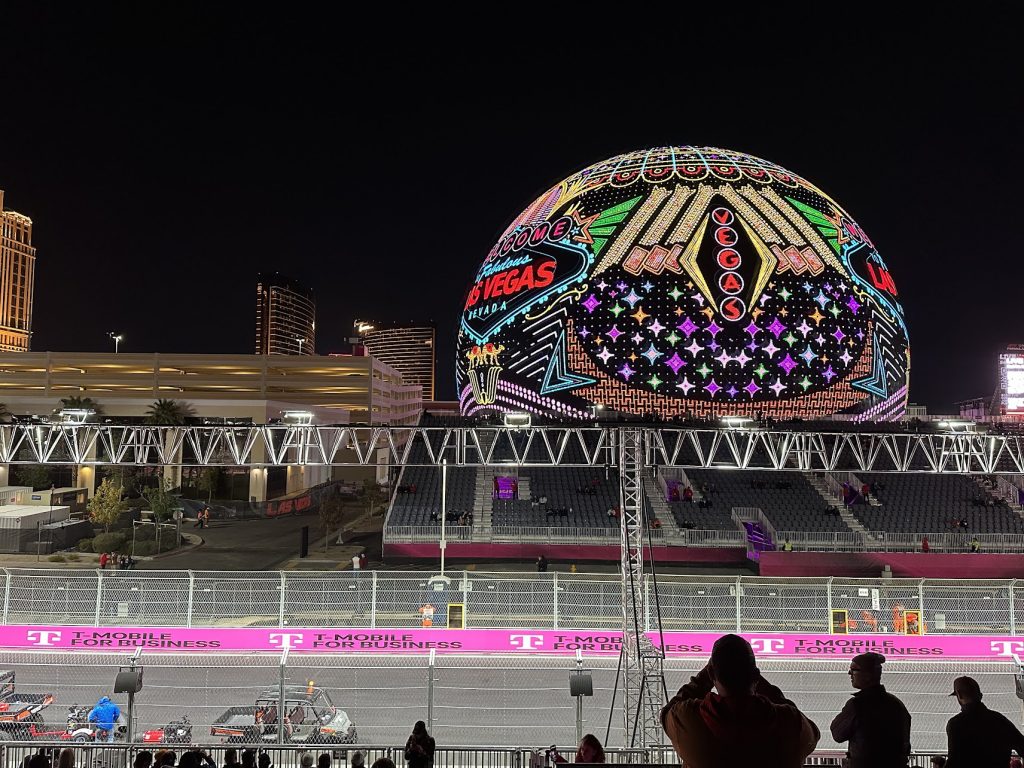
Next weekend Washington DC will play host to two major events at once. On the National Mall and across city streets, INDYCAR will stage the Freedom 250 Grand Prix, the first street race in the capital’s history. On Saturday, Aug 22, about a mile north, the Library of Congress will host their 26th National Book Festival at the Walter E. Washington Convention Center. Our team works the Festival. Decibel Events has been the Operations and Logistics vendor for the Library of Congress National Book Festival since 2009. We are not producing the race, we’re just sharing a city with it, along with every other event production team putting on an event in DC this month. So when I tell you that sooner or later your host-city will book a mega-event on top of your established event, I’m not guessing. It is the situation we are working right now. Our load in starts Tuesday. This isn’t the first time a city has changed the ground rules around an event we produce, and it won’t be the last. Not one time has our answer to a client been to give up the date. The race outside our window INDYCAR takes over the Mall on August 22 and 23. A 1.7-mile, seven-turn street circuit, broadcast live on FOX, with the main race on Sunday. That part you’ve probably read about. The part that matters to every other event producer, client or host in town is longer and more nuanced. The District has posted Emergency No Parking along the affected streets from July 12 through September 15. Construction crews have been closing parking lanes, curb lanes, and partial travel lanes from July 22 through August 14 for the buildout, then they will again from August 24 through September 3 for the breakdown. This makes it a nine-week street footprint for a two-day race, and every team producing an event in this city sits somewhere inside this footprint this month. Including us. Here’s what race weekend looks like from the festival side, all of it straight from the Library of Congress’ public information team. The convention center sits at Mt. Vernon Square, with a Metro station on the Green and Yellow lines at our door and well clear of the circuit. The Library requires tickets this year (totally free, get them here), encourages advance registration, and will have same-day tickets available. Can’t make it in person? The Library will livestream a selection of programs and post video of everything shortly after. The full guide lives at loc.gov/bookfest, and if you’re coming, read it before you leave the house. Getting anywhere on a race weekend goes a lot better if you checked the map the night before. Fair warning: this section will be ancient history by October. The rest of the post won’t be. I was there for year one in Las Vegas In November 2023 I flew to Las Vegas for the inaugural Formula 1 Las Vegas Grand Prix. Most of you know I’m a fan. But I made it a priority to go because when a city attempts something at that scale for the first time, it’s professional development for anyone who does this for a living. The photos in this post are mine from that weekend. Nine minutes into the first practice session, the downforce from a car pulled a water valve cover loose and it destroyed the underside of the Ferrari. Crews spent hours pulling and inspecting covers across the 3.8-mile circuit, and race officials didn’t get the second session started until 2:30 in the morning, in front of grandstands that security had cleared out hours earlier. We only knew it was happening because you could hear it from our room at the Venetian. The logistics and decision matrix around clearing the stands is enough for an entire post itself. Local businesses had already sat through months of construction by then. Ticket holders filed a class action, and the organizers settled it for just over three million dollars. I don’t say any of that as a knock on Vegas. That’s just what year one looks like up close. Monaco has hosted a Grand Prix on its streets since 1929. Disney has spent seventy years working out how people move through a park. When those operations look effortless, it’s because somebody solved the hard parts decades ago. Vegas earned year two the hard way, and in years two and three the organizers had shorter build windows, better merchant coordination, and contingency plans they’d actually rehearsed. DC is in its inaugural year right now, producing an event on some of the most jurisdictionally complicated ground in the country. NPS, Secret Service, Metro PD, US Park Police, DDOT, and a federal schedule that doesn’t get changed for a race. The team producing it has its work cut out, and whoever produces the next first-year event in this town will be grateful for the playbook they’re writing. The people covering a race like this write for the fans going to it. Almost nobody writes for the teams working a different event in the same city that month. That’s the seat we’re in. This one’s for you. The Library of Congress National Book Festival team has been through a citywide shakeup before There’s a piece of this weekend’s story most coverage will skip, and honestly it’s my favorite part. The reason the National Book Festival and an IndyCar race can coexist in this city at all goes back to a disruption the National Book Festival took on the chin twelve years ago. For over a decade the Library held the National Book Festival outdoors on the National Mall, with crowds that topped 200,000 across a weekend. Then in 2013, right as that year’s Festival was about to open, National Park Service rolled out their new rules for the National Mall. The Park Service had just finished a major turf and irrigation restoration, and it now required major changes. This included protective decking over the grass for
Behind the Numbers of America’s Largest-Ever Fireworks Show: A DC Producer’s View
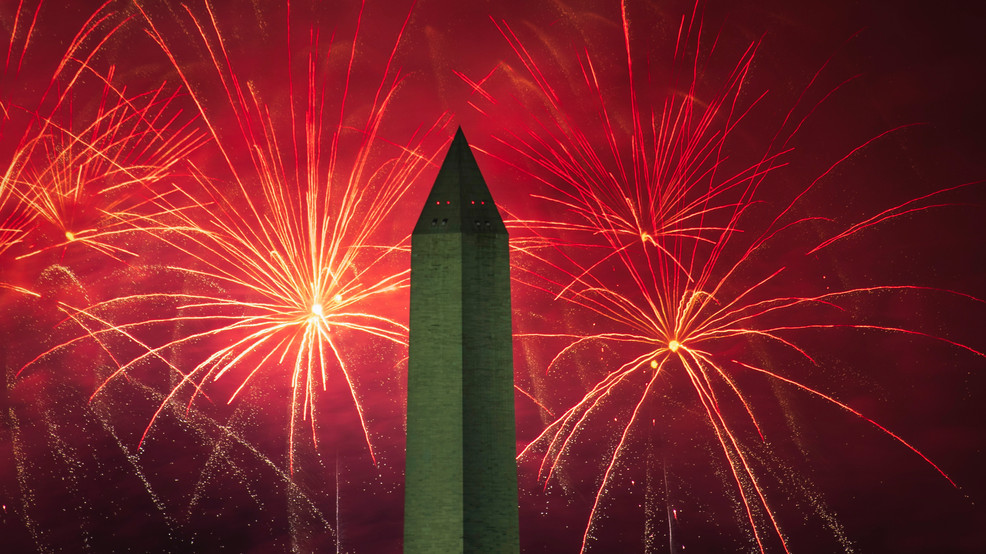
On the night of July 4, 2026, Washington is going to attempt something no city has ever pulled off: roughly 850,000 fireworks in a single display. That is not a typo. A normal Fourth on the National Mall runs somewhere between 17,000 and 20,000 shells across about 17 minutes. This year’s Salute to America is built for 40 minutes and a Guinness World Record. We want to be clear up front: Decibel Events is not producing this show. We are watching it the way any Washington DC production company watches a once-in-a-generation build, with real excitement and a professional eye on the logistics most people will never notice. We have worked with Pyrotecnico on productions before, and we know a little about what a night on this scale actually demands. So let’s go behind the numbers: what the figures really mean, and what it takes to put that much into the sky over a secured Mall. The Numbers, Decoded The headline figure keeps moving depending on the source, landing somewhere between 850,000 and 860,000 shells. Either way, the scale is hard to picture, so a little context helps. The show most Americans think of as the biggest is Macy’s over the East River. The American Pyrotechnics Association pegs a typical Macy’s show at 60,000 to 85,000 aerial shells and effects. This year’s DC display is aiming for roughly ten times that. The mark to beat is the current world record set in Manila in 2016, which used more than 810,904 fireworks. In other words, organizers are not trying to top Macy’s. They are trying to top the planet. One detail we love, because it is pure production thinking: the largest shells will still be 10 inches, the same size DC has used in prior years. On a footprint as tight as the National Mall, safety codes cap how big a single shell can be. So the record is a volume-and-choreography challenge, not a bigger-shell challenge: more shells, spread across a much longer runtime. That is a very different and much harder thing to pull off. Ten Launch Sites, Eight Barges: The Part Nobody Sees Here is where a spectator sees magic and a producer sees a logistics chart. The fireworks are being fired from ten separate sites: the Lincoln Memorial Reflecting Pool, West Potomac Park, and eight barges floating on the Potomac River. Ten firing locations is not ten times one show. It is a single, unified sequence that will be one continuous experience from the ground, which means every one of those sites has to be synchronized to the same clock, the same music, and the same creative arc. Getting eight barges positioned, anchored, loaded, and wired on a working river is its own operation before a single shell goes up. Add the land-based sites, the cabling, the firing systems, and the redundancy you build in when there is no second take, and you start to appreciate the scale of the operation and the pre-production behind those 40 minutes. Then there is smoke. On a humid Washington night, spent smoke can hang in the air and wash out everything behind it. Part of the reason for stretching the show to 40 minutes is giving time between each sequence to allow for the smoke to clear before the next one fires. That is a creative choice and a weather bet at the same time, the kind of call that separates a produced show from a pile of fireworks going off. Producing Inside a National Special Security Event This is what turns a big show into a genuinely complex one, and it is the part closest to our own work. The Salute to America has been designated a National Special Security Event, led by the U.S. Secret Service. For anyone who has not produced inside one, that designation changes everything about how you operate. Security magnetometers for the public open at 1 PM. Attendees move through airport-style screening, with a clear-bag rule and a long list of prohibited items, and there is no on-site storage, so whatever you surrender at the checkpoint is simply gone. The public sees a slow line at the gate. Behind it sits a locked-down site plan that reshapes everything else. Credentialing, vehicle access, load-in windows, and comms all bend around the security perimeter rather than the other way around. You cannot just send a truck in when you need one. You plan the entire build against access rules that are not yours to set, and you build in the margin to absorb whatever those rules do to your timeline. For a corporate event production company that works in Washington DC, none of this is exotic. It is a normal Tuesday. Protective details, screening perimeters, and federal calendars are the standard operating conditions here, and learning to produce a flawless show inside them is a large part of what DC event production actually is. The Immovable Date Every producer reading this already feels the thing that makes this show so demanding, and it has nothing to do with the shell count. You cannot move July 4. There is no rain date on the nation’s 250th birthday. The forecast is calling for extreme heat, air quality is expected to degrade as the smoke builds, and the whole thing is live, nationally visible, and one shot only. There is no version where the crew gets a do-over on Monday. That is the exact pressure profile of the events we work on: a hard date, a live audience in the hundreds of thousands, national visibility, and zero margin for a reset. It is also why the real skill in production lives underneath the part the audience sees, in the planning that makes the visible stuff happen on time, on the one night it has to. What We’ll Be Watching For We get asked this every time a show this big comes up. Beyond enjoying it like everyone else, here’s what our team will actually be watching on the Fourth.
In-House AV vs. Outside AV: The Conflict of Interest Hiding in Your Hotel Contract
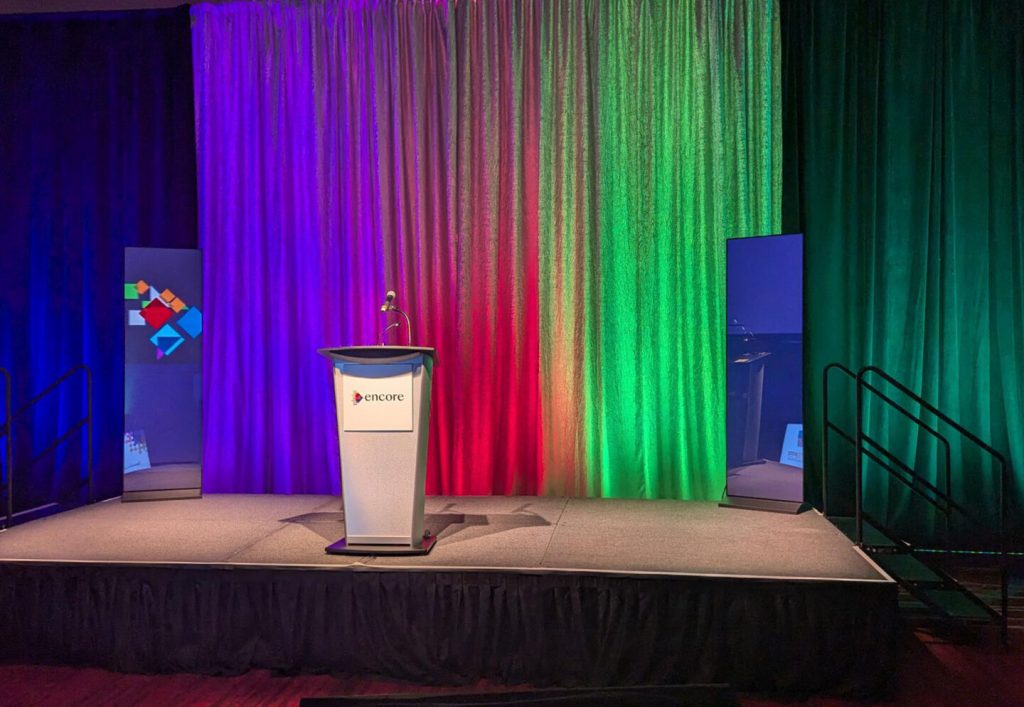
The largest AV company on earth just told the federal government that you do not have to use it. That sentence is sitting in its IPO filing right now, and it changes how you should sign your next venue contract. Run the math on a $200,000 in-house AV invoice. At a 40% commission, $80,000 of what you pay can flow straight back to the hotel. It buys your audience nothing. Here is how the arrangement works, and how to stop paying for it. If you have ever stared at an in-house AV quote and wondered why a few screens, some speakers, and a couple of technicians cost as much as a luxury car, this is for you. The choice between in-house AV vs outside AV is one of the highest-leverage decisions on any event budget, and most executives make it without the one piece of information that changes the math entirely. Key takeaways: Hotel in-house AV providers are economically aligned with the venue, not with your event, because their contracts are built on commissions paid back to the hotel. You are almost never required to use the in-house provider for your event. The largest one, Encore, confirms this in its own SEC filing. In-house pricing runs high because a hotel commission, often 30% to 50% of the invoice, is baked in before anyone turns on a light. The deeper risk is not price. It is talent and continuity: who actually produces your show, and whether the same team comes back next year. Your leverage is highest before you sign the venue contract. Get an outside number first, every time. The Setup Most Executives Never Question Here is how it usually goes. You sign a venue contract for your annual conference or sales kickoff. Somewhere in the paperwork, the hotel introduces you to its on-site AV provider. The quote arrives bundled, branded, and framed as the path of least resistance. Use us, it implies, because we are already here and we know the room. Convenience is real, and so is the pressure. The quote arrives, it is large, and the clock is ticking. Most teams sign because fighting it feels like a distraction from the hundred other things on the run of show. What almost no one asks is the question that actually matters: who does this vendor actually work for? You assume the answer is you, because you are the one paying the invoice. The contract structure says otherwise. The in-house provider’s economic relationship is with the hotel, not with your event. That single fact reshapes every number on the page. What the Encore IPO Filing Actually Says The company that filed to go public is Encore Inc., formerly known as PSAV. It is the dominant in-house AV provider in the United States and the largest business-to-business live events company in the world by revenue. It is backed by Blackstone, the world’s largest alternative asset manager, it is seeking to raise roughly $500 million, and it intends to trade on the New York Stock Exchange under the symbol ECR. The scale is enormous: more than 13,000 employees, over 400,000 events a year, roughly 100,000 customers including about 95% of the Fortune 500, across approximately 2,200 venues in 23 countries. It is the on-site AV and production partner inside properties run by Accor, Hilton, Hyatt, IHG, and Marriott. When you walk into a major hotel ballroom in this country, there is a strong chance the AV gear in the corner belongs to this one company. And with its December 2025 acquisition of FIRST, that reach now extends past hotel ballrooms and onto corporate campuses and headquarters, which means even your on-premises company events increasingly run through the same machine. Now the part that should change how you negotiate. According to Encore’s own S-1 registration statement filed with the U.S. Securities and Exchange Commission, the company signs contracts at each venue that make it the exclusive on-site provider of event technology. To win and keep that exclusivity, it makes up-front venue incentive payments to hotels and structures its agreements around revenue-based commissions that, in the filing’s language, keep the company economically aligned with its venue partners. Read that again. The economic alignment, by design, is with the hotel. Not with the company hosting the event. The filing also notes that across its contracted venues, Encore captures roughly 80% of the available AV business and views the remaining 20% as growth it intends to pursue harder. And then there is the sentence that quietly defeats the entire pressure campaign. Encore’s filing states plainly that these exclusive contracts do not preclude outside providers, and that event planners retain the option to use outside AV. The exclusivity prevents another company from being permanently installed in the building. It does not require you to use the house vendor for your event. The largest in-house AV company on earth says so in a federal filing. Follow the Money: Why the Incentive Runs Against You Once you understand the commission structure, the pricing stops looking irrational and starts looking inevitable. Independent industry sources, including AV firms and meeting-planner publications, consistently report that hotels collect a commission of roughly 30% to 50% of the in-house AV invoice, with some accounts citing ranges as high as 40% to 60%. That commission is not a discount the hotel passes to you. It is a cost the vendor bakes into the quote and still clear a profit on top. The higher your AV invoice, the bigger the hotel’s cut, which means everyone on the venue side of the table benefits when your AV bill goes up. That is the conflict, stated cleanly. Your interest is a lean, high-impact show. Their interest is a larger invoice, and a higher sales commission. Make it concrete. On a $200,000 in-house AV invoice at a 40% commission, $80,000 flows back to the hotel as a kickback. That money does not buy your audience a better screen, a cleaner mix, or a better-run show. It buys
How to Choose a Corporate Event Production Company
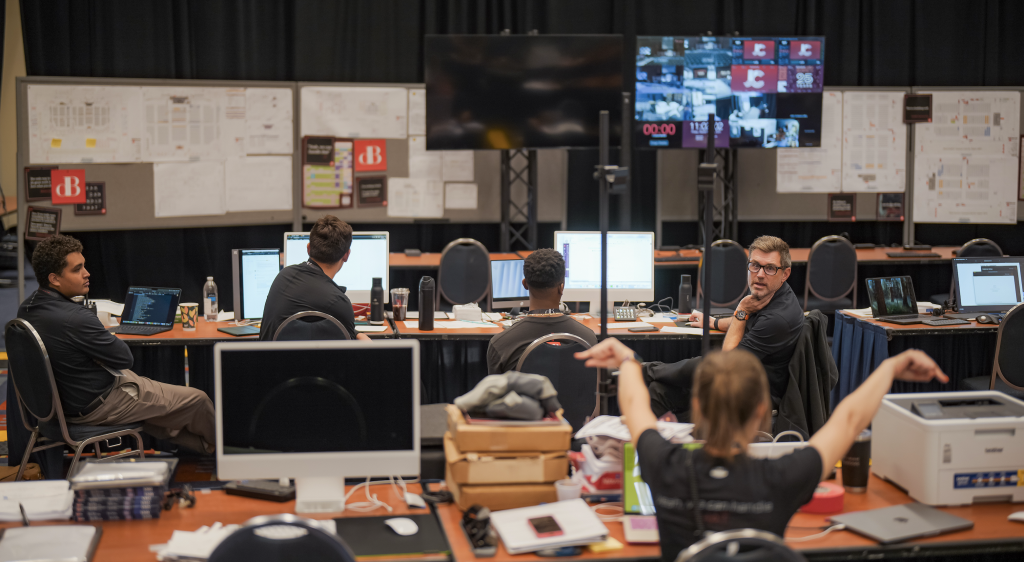
Choosing the wrong production company on a high-stakes corporate event is expensive in ways that do not show up on the invoice. Sessions start late. Your agenda slips by twenty minutes and never recovers. Speakers get rattled. Sponsors notice. The people you brought together remember the parts that went sideways, not the parts that worked. This is a buyer’s guide for the executive, event director, or marketing lead scoping a complex corporate event in the high six-figure to low seven-figure range. It covers what to ask, what to look for, and what most companies in this category will not tell you up front. What does a corporate event production company actually do? A corporate event production company is responsible for everything that has to happen for your event to be a success. That includes the management venue, vendors, run-of-show, registration, AV, staging, signage, talent management, contingency planning, and the dozens of small operational details no one notices when they are handled correctly. The category covers a wide range. Some shops are creative-heavy and execution-light. Some own warehouses full of gear and steer clients toward what they already have. Some are pure third-party producers who manage every vendor on your behalf with no inventory to push. The right fit depends on the size, complexity, and risk profile of your event, but for high-stakes corporate work, the third category executed well is what you want. The bar within that category is higher than most buyers realize going in. What questions should I ask a corporate event production company? Six questions separate the companies that can run a complex, high-stakes corporate event from the ones that cannot. 1. Can I hear the game tape, or come watch you run a similar event before we sign? This is the question almost no buyer asks, and the most revealing one. Many production teams record their internal production communications during a show. Professionals call it game tape. Decibel records ours and listens back after every event so we get better. Clients have asked to hear excerpts to understand how we actually operate in the room, and we share them. How a crew talks to each other when the room is hot is the most honest signal you will get. Ask whether they record, and whether they would share a few minutes of it. The live-observation version of the same question is just as good. Photos and case studies sell a sanitized version of any event. Sitting in the back of the room for twenty minutes during a live show tells you what a year of pitch decks cannot. How the team treats clients under pressure. How they treat each other. Whether the principal you met is actually running the show or has handed it off to a junior team. Whether they look prepared or scrambling. If a production company will not let you hear the tape or watch a comparable event, that is your answer. 2. The conflict of interest most buyers never see Many AV rental houses have expanded into production and pre-production work. On the surface they look like full-service producers. In practice, they carry an inherent conflict. They are advising you on what gear you need while also being the company that owns and rents that gear. The advice and the sales pitch come from the same conversation. This shows up in subtle ways. You will get the package that fits their inventory, not the package that fits your event. You will hear less about alternatives that sit outside their warehouse. You will pay for what they happen to own. A true third-party producer has no inventory to push. They source what your event actually needs, from whoever has the right kit at the right price, and the relationship runs through them. That is the difference between a vendor and an advocate. Ask directly: do you own the gear you are recommending? If they do, ask how they manage the conflict. If they cannot answer that cleanly, you have your answer. 3. What is your contingency plan, and what kind of backup do I actually have? Ask them to walk you through what happens if your keynote cancels twelve hours before, if the venue loses power, or if a vendor no-shows. The quality of the answer tells you whether you are hiring planners or order-takers. Then go a layer deeper on the technical side. Backups come in three flavors. A hot backup is duplicate gear, powered up and running in parallel, ready to take over in real time. A cold backup is spare equipment in the room, not running, that can be swapped in if something fails. No backup is exactly that. Each model has a budget implication, and buyers commonly trade backup depth for budget on lower-risk segments of a show. That is a reasonable trade, as long as you know which segments you are trading and what the failure cost is. A good producer will tell you what they recommend, where they would push for hot, and where a cold or no backup is a defensible risk. A weaker one will quote you the cheapest option and not tell you what you traded away. 4. Who is actually in the room when the event is running, and what are they doing there? This is not just about whether the senior team you met in the pitch shows up. It is about who they show up as. Is the on-site contact the producer or project manager who has been with you since planning, the person who knows your stakeholders and your hot buttons? Or is it a sales rep or account rep from a rental house whose job is to keep their AV team supplied, not to keep you informed? The distinction matters because their loyalty determines what they do under pressure. A producer who has been with you from kickoff is in the room to manage your event. An account rep from a gear vendor is in the room to
5 Production Disciplines Corporate Event Teams Should Borrow From EDC Las Vegas 2026
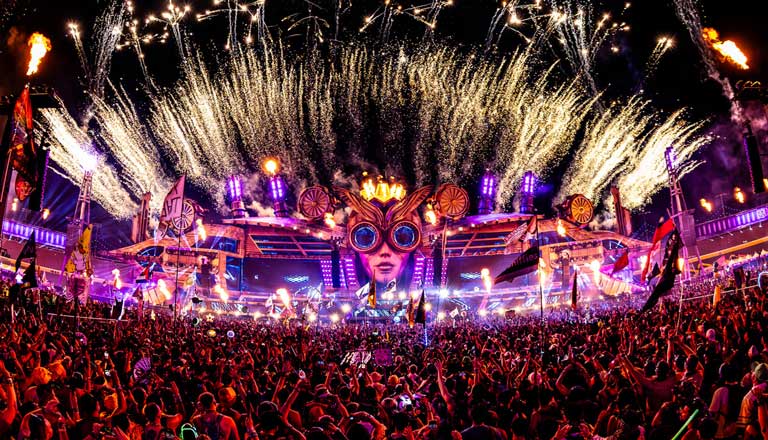
I just got back from the 30th anniversary of EDC Las Vegas. Three nights, nine stages, more than 240 artists, north of 170,000 attendees per night under the kineticJOURNEY theme at Las Vegas Motor Speedway. The production budget is public, on the record from Insomniac founder Pasquale Rotella in an interview with Stage Hoppers. EDC Las Vegas runs $45 million to $50 million to produce. The regional EDC editions in New York and Orlando run $5 million to $7 million. The Las Vegas edition takes a month to set up, occupies 600 acres, and peaks at roughly 5,000 workers on site. The main stage alone, kineticFIELD, is 440 feet wide and 100 feet tall, with 1,400 light fixtures, 26 lasers, and 33 pyro cannons. I am putting those numbers up front because they matter to the detail that follows. This was not my first EDC and it will not be my last. I go as a producer and a fan. I watch how the team at Insomniac runs the operation, I take notes on what is working, and I come back with a clearer picture of what corporate event programs should be doing more of and I go for the pure enjoyment of the experience. Most of what makes EDC work at this scale is not the budget. It is the operational discipline underneath the budget. And those disciplines certainly scale down to a $500,000 corporate conference. Insomniac founder Pasquale Rotella told DJ Mag ahead of the 30th anniversary that EDC is “still underground in a lot of ways.” That sounds counterintuitive for an event drawing over half a million people. But the discipline that built EDC into what it is now started underground, and at 30 years in, it has been fully operationalized. That is what corporate programs need to learn from. Here are the five disciplines worth bringing back into corporate event production. 1. Operational Consistency Is What Builds Brand. Not Novelty. EDC started in 1997 as a small Los Angeles event. The 2026 edition was its 30th anniversary, and Insomniac just announced the 2027 festival will expand to two consecutive weekends for the first time in its history. Thirty years of operating standards do not happen by chance. The team at Insomniac has spent three decades refining how they treat attendees, how they treat talent, and how they treat crew. The theme changes (this year it was kineticJOURNEY, prior years have included kineticGAIA and kineticLOVE) but the operational floor underneath the theme does not. This is the lesson most corporate event programs are missing. Marketing teams chase novelty. New themes, new agencies, new platforms, new gimmicks. Year over year, the attendee experience drifts because the operational standards underneath the theme are never locked in. The corporate programs that build durable brand equity do the opposite. They lock in a small set of operational standards (how attendees are greeted at registration, how speakers are supported pre-show, how crew is briefed at call time, how vendors are managed on the floor, how the close-out happens) and they refuse to compromise those standards across years. The theme can change every year. The standards underneath should not. That is how a 30-year brand gets built, whether the brand is a festival or a corporate flagship event. 2. Immersion Is the New Baseline, Not the Premium Tier Walk through the gates at EDC and the production never lets up. KineticFIELD at 440 feet wide and 100 feet tall uses every tool available: 1,400 light fixtures, 26 lasers, 33 pyro cannons, fireworks, LED panels the size of buildings, CO2 cannons, and an owl-shaped stage structure that has become iconic to the brand. CircuitGROUNDS is a semi-circle of LED walls and fire. Art cars, illuminated installations, carnival rides, ground-level performers, sky-level visuals, content layered everywhere you look. This is what attendees under 35 now expect from any live experience. They have been trained by TikTok, by Instagram, by the internet. This is what the phenomena like the Savannah Bananas tap into when they execute their sensory density. A flat stage with a podium and a single screen no longer reads as production. It reads as a placeholder. Right now, corporate event production is moving in the wrong direction on this. The pattern is everywhere. Procurement teams selecting AV vendors on lowest cost. Production budgets stripped down to a single IMAG, two side screens, a podium, and house lighting. RFPs structured to optimize for price per attendee instead of impact per attendee. Last-minute scope cuts that pull lighting design, environmental graphics, and on-floor activations out of the show. The math looks clean on the spreadsheet. The math is wrong on the floor. When a Fortune 500 brand hosts an executive summit with the same AV setup a mid-tier association used in 2014, attendees notice. When a tech company hosts a developer conference that looks visually identical to every other developer conference, attendees notice. When a corporate flagship event looks like a hotel ballroom with a logo on a banner, attendees notice. They are comparing what they see in your room to what they see in their feed, and they are reaching conclusions about your brand based on that comparison. The corporate programs that are winning right now are layering sensory texture intentionally. Environmental lighting design instead of house lights. Audio beds and sound design under transitions, not just under keynote music. Content distributed across multiple screens at different sightlines, not centralized on a single IMAG. Floor-level activations that give people something to look at and interact with between sessions. Branding integrated into the architecture of the room, not stuck on a banner at the back. None of that requires a festival budget. It requires deciding in pre-production that every sightline is a design opportunity, assigning a producer to own that decision, and protecting that scope through procurement instead of cutting it first. 3. Safety Is a Production Discipline. Run It Like One. The most important thing I saw at EDC 2026 happened on Sunday
Event Security Best Practices After WHCA: 5 Disciplines That Separate Real Plans From Theater
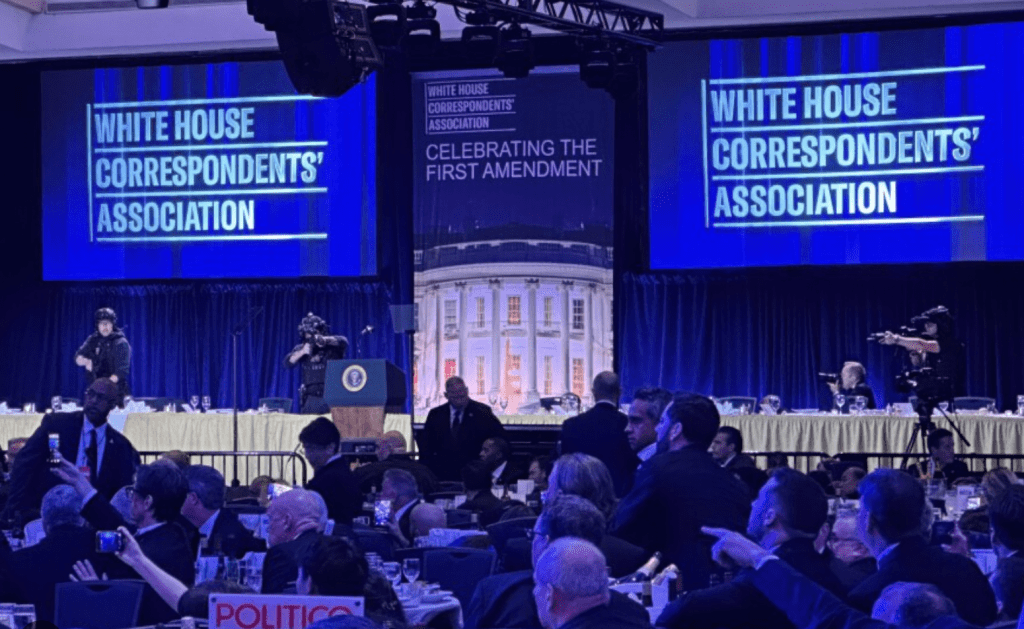
Saturday April 25, 2026, at the White House Correspondents’ Association dinner, an armed man rushed the magnetometer at the Washington Hilton with a long gun in plain view. A U.S. Secret Service officer wearing a ballistic vest was shot in the chest. The officer drew his weapon and returned fire. The suspect went down at the top of the staircase leading to the ballroom. He never reached the room. The protective layer worked. By inches. The room did not work the same way. According to NPR reporters in attendance, the ballroom fell into “eerie silence” and “a lot of confusion.” Trump, Vance, the First Lady, and Cabinet members were rushed out by Secret Service. Members of congressional leadership, who travel with Capitol Police protective details, were evacuated. Rank-and-file lawmakers were left locked down inside the ballroom with no clear plan, according to one House GOP attendee who described being “surprised and unsettled” by the gap. Some guests ran for exits. Others lingered. Some hid under tables for four to five minutes. A White House Deputy Chief of Staff tried to start a “U-S-A!” chant during the evacuation. The accused, Cole Tomas Allen, 31, was not someone who slipped through the perimeter on event day. He had checked in to the Washington Hilton on April 24, the day before the dinner. He had booked the room on April 6. He came down from a 10th-floor room with a shotgun, a handgun, and knives, and he reached the screening checkpoint before anyone stopped him. If you are an event director, marketing leader, or chief of staff responsible for a high-profile corporate event in 2026, this guide is for you. It explains what the WHCA incident actually teaches the rest of us, the public threat-assessment doctrine your team should be reading directly, and the operational disciplines that separate real security plans from security theater. It is informed by 20+ years of work on events for the Library of Congress, the Department of Defense, the U.S. Department of Energy, Presidential campaign events, and Fortune 500 C-Suite meetings hosted alongside the United States Secret Service, Capitol Police, Diplomatic Security, the White House Advance team, the State Department, and federal, state, and local law enforcement. Bottom line. A reactive plan is the illusion of safety. A proactive plan is the real thing. WHCA is the cleanest illustration in years of why the difference matters. Here is how to fix yours before your next event. Reactive vs Proactive: The Two Postures of Event Security A reactive plan is designed to respond after a breach. Uniformed officers in the lobby, magnetometers and bag checks at the door, marked law enforcement vehicles parked out front. The team is ready to move when something happens. Most clients look at this and feel safe. It looks like security. A proactive plan is designed to make the breach impossible. The bad actor never gets close enough to require a reactive response. The plan anticipates the threat vectors, closes them off in advance, and engineers layers between the public street and the principal-occupied space such that an incident at one layer cannot propagate to the next. Both plans have armed officers. Both plans have screening. The difference is intent and architecture. A reactive plan is built around response time. A proactive plan is built around prevention. WHCA is a useful test case for the distinction. The screening layer was reactive in the best sense of the word. It held under live fire. But the outer layers, where a proactive plan stops a bad actor before they ever reach a magnetometer, did not. Allen booked a room three weeks in advance, traveled cross-country by train, checked in 24 hours before doors, and came down from his floor with weapons visible. None of that should have permitted a person to get to a checkpoint with a long gun, and a proactive posture is what would have changed it. The Washington Post reported that the dinner was not given top security status that would have unlocked the full weight of federal resources, even though it concentrated the President, Vice President, FBI Director, multiple Cabinet secretaries, and roughly 2,600 attendees in one ballroom. Former FBI Deputy Director Andrew McCabe told NBC News the security posture should have been “almost on the level of a national security event.” The federal protective elements are excellent at the proactive posture for their assigned principals. Where commercial events fall down is the rest of the room. The Secret Service has a duty to its protectees. Capitol Police, Diplomatic Security, and the protective apparatus around them operate the same way. By that measure, WHCA worked. But the duty of care to the thousand-plus other people in the room is yours, not theirs. After WHCA, after the UnitedHealthcare CEO shooting in late 2024, after a string of incidents at high-profile gatherings, that gap is now a board-level liability. The fix is not exotic. It is five key disciplines. The Five Disciplines That Separate a Real Plan From Theater If you do nothing else after reading this, do these five things before your next event. Build a layered architecture. Defense in depth. Concentric protective zones from the public street to the principal-occupied space, with controlled access, controlled movement, and controlled sightlines at every layer. Lock down the operational elements. Hold rooms, hard rooms, SCIFs where required, line-of-sight planning, secure movements, and at least three layers of alternates for every primary action. Write your pre-decisional triggers. What happens during a credible breach, suspicious package situation, threat to principal or active threat indicator. Each trigger has one named decision authority and a pre-rehearsed response. IN an emergency you need execution, not deliberation. Extend your threat window to 24-48 hours, longer when the principal warrants it. Especially in hotels. The day-of is too late. Pre-event sweeps, lockdown of the event floor, full chain-of-custody for every delivery and piece of equipment, overnight security presence, and vendor vetting tied to specific zones and time windows. Engineer communications as
The Scroll Generation Is Coming for Your Corporate Events: What Jesse Cole’s Savannah Bananas Reveal About the Future of Live Experiences
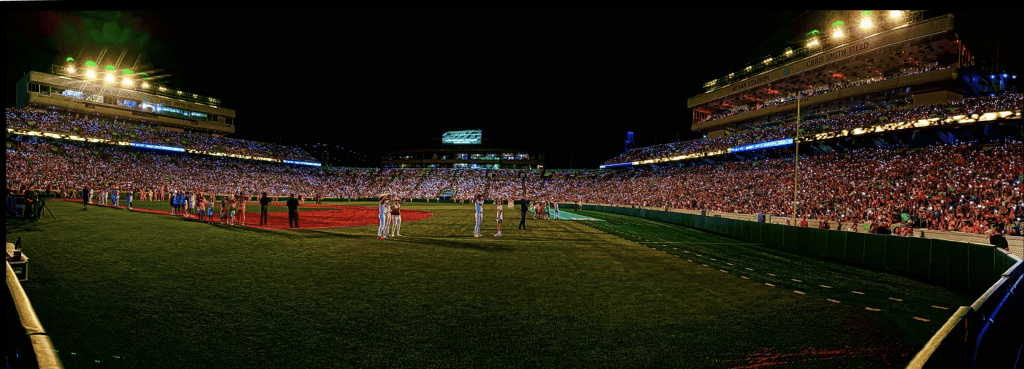
On Saturday night, I stood in Kenan Stadium in Chapel Hill with 50,000 other people and watched a baseball game where nobody cared about the score. That is not hyperbole. The Savannah Bananas, Jesse Cole’s traveling spectacle of entertainment-first baseball, held that entire stadium for two straight hours with a show so relentless, so tightly scripted, and so deliberately overstimulating that it did not even feel like a sporting event. It felt exactly like scrolling through social media at full speed. Every second was filled. Every gap between innings became a vignette. Dance routines between batters. A sing-along. An audience interaction bit (many, many interaction bits). A content capture moment. Players filming TikToks between at-bats. PAs and crew hustling and sprinting between marks. The whole thing felt like Everything Everywhere All At Once staged on a baseball diamond, in a football stadium, on tour. I have spent 20 years in event production. I have produced events inside the White House, the State Department, the Supreme Court, for the Library of Congress, the Department of Defense, and Fortune 500 corporations. I was a Vice President at FleishmanHillard running national event programs before I founded Decibel Events. I have served as lead site advance on a presidential campaign, managing event production across the United States for over 300+ travel days where a single mistake makes the evening news. I say all of that not to impress you, but to give you context for what I am about to say: standing in that stadium, watching Jesse Cole’s operation execute, I saw the future of live events. And most corporate event managers are not ready for it. Not because you should turn your annual conference into a circus. But because Cole did not build the Bananas to be weird. He built the first major live entertainment model designed specifically for the way a new generation consumes content. Rapid, overlapping, dopamine-driven bursts with zero tolerance for dead time. That generational shift is not a future problem. They are entering your attendee base, your workforce, and your client organizations right now. The question is not whether the expectations for corporate events will change. They already have. The question is whether your events and your event partners are ready. In today’s blog I will break down what the Bananas model reveals about where live events are headed, the specific tactics corporate event managers should adopt, which elements belong at the ballpark which you can bring into your boardroom, and why this shift should fundamentally change how you think about your event strategy. I am also planning a longer follow-up piece that goes deeper into the generational data and the specific format changes coming for our industry. Consider this your advance warning – you are not ready. The Scroll Generation: The Single Biggest Disruption Facing Corporate Events I want to be clear about something. This is not one observation among many. This is the thesis. Everything I have seen supports it. Your Next Attendees Were Raised on the Scroll The best way I can describe the entire Savannah Bananas experience is that it was like scrolling on social media, live and in person, at stadium scale. For two hours, there was no pause. The script and show were built for an attention span shaped by screens. Short music clips cycling every thirty seconds or less, non stop for hours. Vignettes overlapped so it was physically impossible to catch them all at once. Content layered on content with the rapid-cut pacing of a TikTok feed brought to life. It was overstimulation by design. And the crowd, especially the younger half, did not just tolerate it. They expected it. They embraced it. They lived it. They were built for it. Here is the part that should concern every corporate event director reading this. The kids and young adults who were singing along to Taylor Swift’s whole catalog, back album bangers and new-to-me-sing-a-longs like “It’s Raining Tacos” at that game are not staying kids. They are aging into your attendee base. Within five to ten years, the majority of people sitting in your conference sessions, staffing your trade show booths, and attending your corporate meetings will have been born into an attention economy shaped by algorithmic content feeds, short-form video, and infinite scroll. Their baseline expectation for pacing, visual stimulation, and engagement is not a preference they can turn off when they put on a lanyard. It is neurological. It is how their brains were trained to process information from childhood. And it is fundamentally incompatible with the way most corporate events are currently designed. Most Corporations Are Not Even Having This Conversation Here is what concerns me most. Most corporate event programs are still built on a format that has not meaningfully changed in twenty years. A series of sessions. Keynotes, panels, breakouts. Separated by unscripted gaps. Delivered in conference rooms with minimal production value. Held together by the assumption that attendees will sit still and pay attention because the content is important enough. It is locked in through decision-by-committee and from staff unwilling to challenge the c-suite and take calculated risks and adjust to the new reality. That assumption is already failing. I see it at events constantly. Watch any conference audience right now. Count how many people are on their phones thirty minutes into a keynote. Notice how the hallways fill during afternoon breakout sessions. Look at the post-event surveys that consistently flag “session fatigue” and “engagement” as top concerns. These are not isolated complaints. They are early indicators of a structural mismatch between how events are built and how audiences actually process information. Now imagine that same format five years from now, when the median attendee grew up consuming content in seven-second bursts. The math does not math. And most organizations, particularly large corporations with entrenched event formats and legacy vendor relationships, are not even beginning to have this conversation. They are still debating whether to push a minor update to their networking app, not whether
Event Sponsorship Ideas That Actually Work (And How to Land Them in Washington, DC)
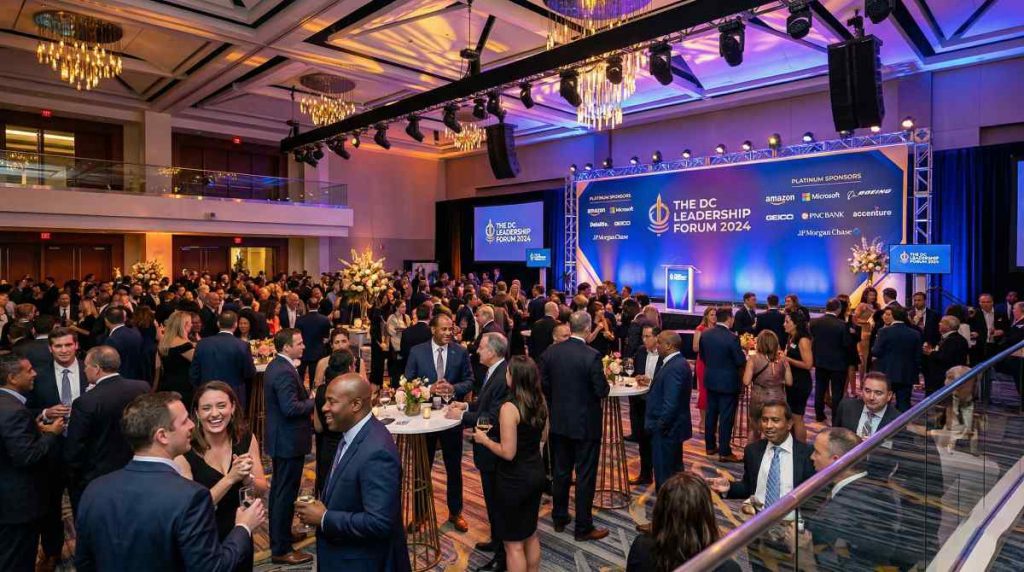
Securing the right sponsors can be the difference between a good event and a great one. But in a city as competitive and politically charged as Washington, DC — home to government agencies, global nonprofits, Fortune 500 offices, and some of the country’s most influential trade associations — knowing how to position your event for sponsorship success is both an art and a science. Whether you’re planning a corporate conference, a community festival, a product launch, or a hybrid summit, the right event sponsorship ideas can dramatically expand your budget, elevate your production value, and build long-term partnerships that outlast any single event. At Decibel Events, we’ve helped organizations across Washington, DC and beyond craft sponsorship strategies that attract meaningful partners and deliver real results. Here’s everything you need to know. Why Event Sponsorship Still Matters in 2026 Before we dive into specific event sponsorship ideas, let’s establish why sponsorship remains one of the most powerful tools in the event planner’s toolkit. According to IEG’s Global Sponsorship Report, global sponsorship spending surpassed $68 billion in recent years, and that number continues to climb. Brands aren’t just writing checks for logo placement anymore. They want immersive experiences, audience engagement, and measurable ROI. For event organizers in Washington, DC, this shift is both a challenge and an opportunity. The DC market is uniquely dense with: Government contractors looking for visibility with decision-makers Nonprofits and advocacy groups seeking mission-aligned brand partnerships Tech and professional services firms trying to reach a highly educated, high-income audience Trade associations with dedicated event budgets and national reach Understanding your audience and matching them with the right sponsor is the foundation of every great sponsorship strategy. Creative Event Sponsorship Ideas to Attract the Right Partners The most successful event sponsorship ideas go beyond a banner on a stage. Today’s sponsors want integration, exclusivity, and storytelling opportunities. Here are proven ideas that work across event types. 1. Naming Rights and Presented-By Sponsorships The classic, but still highly effective. Offering a “presented by” sponsorship gives a brand top billing across all of your event’s marketing channels: your website, social media, email campaigns, printed materials, and on-site signage. For large-scale Washington, DC events — think annual galas, policy summits, or multi-day conferences — naming rights can command premium prices and are especially attractive to brands wanting sustained visibility in the DC media market. Pro tip: Pair naming rights with a dedicated landing page on your event site to drive measurable web traffic to the sponsor’s brand. 2. Experiential Activation Sponsorships One of the hottest event sponsorship ideas right now is giving sponsors their own branded experience zone within your event footprint. Think: A sponsored networking lounge with branded seating and decor An interactive demo booth where attendees engage directly with a product A sponsored photo moment or content wall that drives organic social sharing A VIP hospitality suite exclusively for sponsor guests Experiential activations give sponsors something money can’t easily buy elsewhere: face time with a captive, relevant audience. Our event production team at Decibel Events specializes in designing these activations to feel seamless and on-brand, for both the sponsor and the overall event experience. 3. Thought Leadership and Content Sponsorships Washington, DC runs on expertise and influence. That’s why content-based sponsorships are particularly powerful here. Consider offering sponsors: A keynote presentation slot or panel moderation opportunity A sponsored breakout session or workshop aligned with their industry focus A branded report or research piece distributed to all attendees A podcast episode or video series produced around the event These sponsorships work because they position the sponsor as a credible authority, not just a check-writer. For government contractors, consulting firms, and policy-focused organizations, this kind of visibility in front of DC’s professional community is invaluable. 4. Digital and Hybrid Event Sponsorships As hybrid events become the new standard, digital sponsorship inventory has expanded dramatically. Smart event planners now offer: Pre-roll video ads on virtual event platforms Sponsored push notifications sent to attendees during the event Branded virtual backgrounds for online participants Sponsored rooms or sessions within a hybrid event platform Email sequence sponsorships sent to your registered attendee list before, during, and after the event Digital sponsorships are especially appealing to brands targeting national or global audiences via a DC-based event, allowing them to extend their reach far beyond the room. 5. Food, Beverage, and Hospitality Sponsorships Never underestimate the power of a sponsored coffee station or open bar. Hospitality sponsorships are among the most memorable event sponsorship ideas because they create repeated, positive brand associations throughout the event day. Options include: Sponsored breakfast, lunch, or cocktail reception with branded signage and napkins Specialty beverage station (coffee bar, smoothie stand, craft cocktail cart) with branded cups Sponsored gift bags filled with co-branded items from the sponsor and the event VIP dinner or exclusive reception for top-tier sponsors and select attendees In DC’s hospitality-forward event culture, where receptions and dinners are often where the real conversations happen, these sponsorships carry significant weight. 6. Award and Recognition Sponsorships If your event includes an awards ceremony or recognition component, sponsoring an individual award category is a compelling and relatively affordable option for mid-tier sponsors. The sponsor’s brand is tied to a positive moment, featured in all award-related materials, and often highlighted in post-event press coverage. This is a particularly effective event sponsorship idea for local Washington, DC businesses that want community visibility without the cost of a headline sponsorship. 7. Sustainability and CSR Sponsorships Washington, DC has a strong culture of corporate social responsibility, and environmentally conscious event sponsorships are gaining serious traction. Consider offering: Carbon offset sponsorships that fund sustainability initiatives in your sponsor’s name Zero-waste station sponsorships with clear signage about the initiative Community giveback sponsorships tied to local DC nonprofits or causes Brands with active ESG (Environmental, Social, and Governance) programs are often actively looking for events that help them demonstrate their values publicly. This is a smart, differentiated sponsorship category that few event organizers are currently offering. How to Build
15 Creative Company Event Ideas for Employees That Boost Engagement and Morale

Planning a company event in Washington, DC? Discover 15 creative company event ideas for employees that strengthen team bonds, boost morale, and create lasting memories. From interactive team-building experiences to wellness retreats, this guide covers everything you need to inspire your next corporate gathering. Why Company Events for Employees Matter More Than Ever Employee engagement is no longer a nice-to-have. It is a business priority. According to Gallup’s 2025 workplace research, organizations with high engagement see significantly lower absenteeism, higher quality output, and stronger profitability compared to disengaged workplaces. One of the most effective ways to build that engagement? Thoughtfully planned company events. In Washington, DC, where professionals attend dozens of corporate events each year, standing out requires more than a standard happy hour or conference room lunch. Employees want experiences that feel personal, purposeful, and fun. Whether you manage a team of 20 or a workforce of 2,000, the right company event ideas for employees can transform your workplace culture and drive real results. Let’s explore 15 creative ideas that DC-area companies are using to energize their teams in 2025. 1. Interactive Culinary Team-Building Experiences Cooking classes have become one of the most popular corporate event ideas for employees and for good reason. Teams work together to prepare a multi-course meal under the guidance of professional chefs. The collaborative nature of cooking naturally encourages communication, delegation, and creative problem-solving. Washington, DC offers world-class culinary venues perfect for these events. From hands-on pasta-making workshops in Georgetown to competitive cook-offs near the Wharf district, there is no shortage of options for teams looking to bond over food. 2. Outdoor Adventure Days Take your team outside the office and into nature. Outdoor adventure days can include hiking excursions along the Potomac, kayaking on the Anacostia River, or team obstacle courses at nearby parks. These activities build trust through shared physical challenges and give employees a refreshing break from screen time. Fresh air and movement do wonders for morale, and the DC metro area’s parks and trails offer beautiful settings for outdoor employee event ideas year-round. 3. Wellness Retreats and Mindfulness Events Wellness-focused events are trending heavily in 2025. Companies across Washington, DC are incorporating guided meditation sessions, breathwork workshops, yoga classes, and mental health panels into their event calendars. These company event ideas for employees show your team that their well-being is a genuine priority. Consider booking a half-day wellness retreat that includes relaxation zones, healthy catering, and holistic workshops. Employees return to work feeling recharged, valued, and more connected to their colleagues. 4. Themed Corporate Celebrations From retro decades nights to elegant black-tie galas, themed celebrations give employees something to look forward to. A well-designed theme ties together the venue, décor, entertainment, and catering into a cohesive experience that feels special. DC’s historic venues near the National Mall, rooftop spaces overlooking the Capitol, and converted industrial spaces in Navy Yard all provide stunning backdrops for themed corporate events. Work with an experienced event creative team to bring your vision to life with custom branding and immersive design elements. 5. Charity and Volunteer Team-Building Events Purpose-driven events resonate deeply with today’s workforce. Organize a company volunteer day where employees assemble care packages, participate in a charity walk, or partner with a local DC nonprofit for a community service project. Research shows that purpose-driven events can increase job satisfaction significantly, making them one of the most impactful company event ideas for employees you can implement. They also strengthen your brand’s reputation and demonstrate genuine corporate social responsibility. 6. Innovation and Hackathon Events Hackathons and innovation challenges give employees the freedom to think creatively and solve real business problems in a fast-paced, energizing environment. Teams brainstorm, prototype, and pitch ideas within a set timeframe, often producing concepts that companies actually implement. These events are especially popular among DC’s tech and government contracting firms. They combine team building with tangible business value, making them a smart investment for any organization looking for employee engagement event ideas. 7. Professional Development Workshops Investing in your employees’ growth is one of the best ways to show you value them. Host skill-building workshops that focus on leadership development, public speaking, design thinking, or industry-specific topics. Bring in expert facilitators or industry speakers to deliver content that is both educational and engaging. In Washington, DC, where professional development is highly valued across government, nonprofit, and private sectors, these events consistently rank among the most requested corporate team event ideas. 8. Company Sports Days and Friendly Competitions Nothing brings a team together quite like healthy competition. Organize a company sports day with activities like relay races, volleyball tournaments, tug-of-war, or a corporate field day. For something more low-key, consider bowling leagues, mini-golf outings, or ping-pong tournaments. These fun company event ideas are inclusive, energizing, and create natural opportunities for colleagues from different departments to interact and build relationships outside of their usual work routines. 9. Escape Room and Mystery Challenges Escape rooms have evolved beyond basic entertainment into legitimate team-building tools. They test communication, strategy, and time management under pressure. Many DC-area escape room venues offer corporate packages with customizable themes and difficulty levels. For a unique twist, work with your event production partner to create a custom mystery or escape challenge tailored to your company’s brand and culture. 10. Employee Appreciation Weeks Rather than a single event, spread the recognition across an entire week. Employee appreciation weeks can include daily surprises like catered breakfasts, afternoon snack bars, peer recognition ceremonies, team outings, and a culminating celebration event. This approach transforms appreciation into an ongoing cultural practice rather than a one-off gesture. It’s one of the most effective company event ideas for employees for organizations looking to build a sustained culture of recognition. 11. Hybrid and Virtual-Friendly Events With many DC-area companies maintaining flexible or hybrid work arrangements, designing events that include remote employees is essential. Hybrid events combine in-person experiences with virtual elements like live streaming, interactive polls, and virtual breakout rooms. The key is ensuring remote participants feel
Event Planning for Corporate Events: The Complete Guide to Delivering Unforgettable Experiences
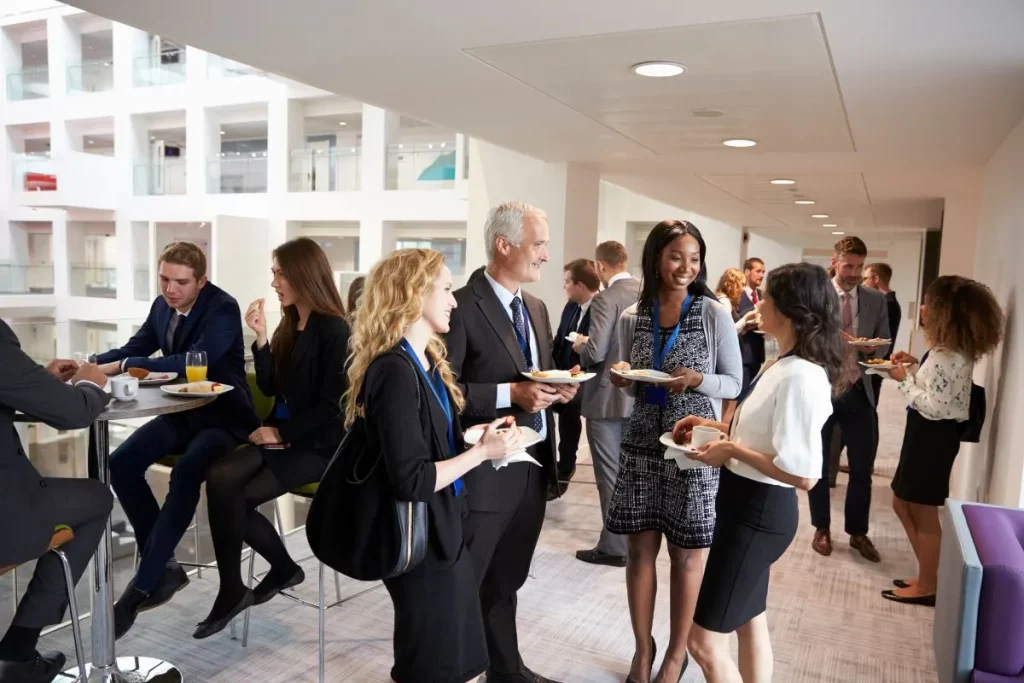
Every successful corporate event starts long before the first guest arrives. Behind every seamless conference, product launch, gala, or brand activation is a detailed planning process that brings together strategy, creativity, logistics, and flawless execution. If you are responsible for event planning for corporate events in Washington, DC, you already know the stakes are high. Your attendees are busy professionals who expect polished experiences, and your leadership team expects measurable results. The good news is that with the right approach and the right team, corporate event planning does not have to be stressful. This guide walks you through everything you need to know to plan a corporate event that impresses your audience, achieves your business goals, and runs without a hitch from start to finish. Why Corporate Event Planning Requires a Strategic Approach Corporate events are fundamentally different from social gatherings. They carry your company’s brand, reputation, and business objectives. A poorly planned event does not just disappoint attendees. It reflects on your organization and can undermine months of relationship-building and marketing effort. A strategic approach to event planning for corporate events means every decision is tied to a clear purpose. The venue you choose, the agenda you build, the entertainment you book, and the technology you deploy should all work together to support your goals. Whether the objective is lead generation, employee engagement, client appreciation, or thought leadership, the planning process must be intentional from day one. According to a 2024 survey by the Center for Exhibition Industry Research, companies that set specific, measurable goals before planning their events reported 34% higher attendee satisfaction scores compared to those that did not. Strategy is not optional. It is the foundation of every great corporate event. This is exactly why leading organizations turn to professional event management partners who bring both the expertise and the systems to plan events that deliver real results. Setting Clear Goals and Defining Your Audience The first and most important step in corporate event planning is answering two questions: What do we want to achieve, and who are we planning this for? Define Your Event Objectives Be specific. Instead of saying you want a “successful conference,” define what success looks like. Is it 500 registered attendees? A 90% satisfaction rating in the post-event survey? Twenty qualified sales leads? Five media placements? Clear goals guide every planning decision and give you benchmarks to measure your return on investment. Understand Your Audience The experience you design for a room full of C-suite executives will look very different from one built for mid-level managers or external prospects. Consider what your audience values, what challenges they face, and what will motivate them to attend and stay engaged throughout the event. In Washington, DC, where corporate professionals attend dozens of events each year, understanding your audience is especially critical because you are competing for their time and attention. Choose the Right Event Format Corporate events come in many forms, and the format you choose should align with your goals and audience. Options include conferences and summits, product launches and brand activations, award ceremonies and galas, team-building retreats, trade show exhibits, hybrid events combining in-person and virtual elements, and executive roundtables. Each format has unique planning requirements, and selecting the wrong one can undermine even the best content and production. Building a Realistic Budget and Timeline Two of the most common mistakes in corporate event planning are underestimating the budget and starting the planning process too late. Both lead to compromises that affect the attendee experience. Start With a Comprehensive Budget Your budget should account for every element of the event, including venue rental, catering, audiovisual production, entertainment, decor, staffing, transportation, marketing and promotion, printed materials, technology platforms, and contingency funds. A good rule of thumb is to set aside 10% to 15% of your total budget as a contingency for unexpected expenses. Experienced event planners know that surprises are inevitable, and having a financial cushion prevents last-minute scrambling. Build a Timeline That Allows Breathing Room For large-scale corporate events, planning should begin six to twelve months in advance. Mid-size events typically require three to six months of lead time. Even smaller gatherings benefit from at least six to eight weeks of planning. Your timeline should include milestones for venue booking, vendor contracts, speaker confirmations, marketing launches, registration deadlines, rehearsals, and day-of logistics. Track Everything in One Place Use project management tools or work with a professional planning team that provides centralized tracking for budgets, timelines, vendor communications, and deliverables. Disorganized planning is the fastest path to a disorganized event. Choosing the Right Venue in Washington, DC Venue selection is one of the most consequential decisions in event planning for corporate events, and Washington, DC offers an exceptional range of options for every type of gathering. Consider Your Event’s Size and Format A 50-person executive dinner requires a very different space than a 2,000-person conference. Think about the flow of the event, including registration areas, main session rooms, breakout spaces, networking lounges, and catering zones. Every area should feel intentional and on-brand. Leverage DC’s Iconic Settings Few cities offer the variety and prestige of Washington, DC venues. From historic properties near the National Mall and upscale hotel ballrooms in Georgetown to modern event spaces in the Wharf district and rooftop venues with views of the Capitol, the city provides backdrops that elevate any corporate event. Choosing a venue that resonates with your audience and aligns with your brand adds an extra layer of impact before a single presentation begins. Evaluate Logistics Carefully Consider accessibility for attendees traveling from out of town, proximity to hotels and public transit, parking availability, load-in and load-out requirements for production equipment, and any venue-specific restrictions on noise, catering, or decor. An experienced event production team can conduct site visits and handle all venue logistics so nothing is overlooked. Designing Content and Programming That Resonates The content and programming of your corporate event are what deliver value to attendees. A beautiful venue and smooth logistics matter, but