Choosing the wrong production company on a high-stakes corporate event is expensive in ways that do not show up on the invoice. Sessions start late. Your agenda slips by twenty minutes and never recovers. Speakers get rattled. Sponsors notice. The people you brought together remember the parts that went sideways, not the parts that worked.
This is a buyer’s guide for the executive, event director, or marketing lead scoping a complex corporate event in the high six-figure to low seven-figure range. It covers what to ask, what to look for, and what most companies in this category will not tell you up front.
What does a corporate event production company actually do?
A corporate event production company is responsible for everything that has to happen for your event to be a success. That includes the management venue, vendors, run-of-show, registration, AV, staging, signage, talent management, contingency planning, and the dozens of small operational details no one notices when they are handled correctly.
The category covers a wide range. Some shops are creative-heavy and execution-light. Some own warehouses full of gear and steer clients toward what they already have. Some are pure third-party producers who manage every vendor on your behalf with no inventory to push. The right fit depends on the size, complexity, and risk profile of your event, but for high-stakes corporate work, the third category executed well is what you want. The bar within that category is higher than most buyers realize going in.
What questions should I ask a corporate event production company?
Six questions separate the companies that can run a complex, high-stakes corporate event from the ones that cannot.
1. Can I hear the game tape, or come watch you run a similar event before we sign?
This is the question almost no buyer asks, and the most revealing one.
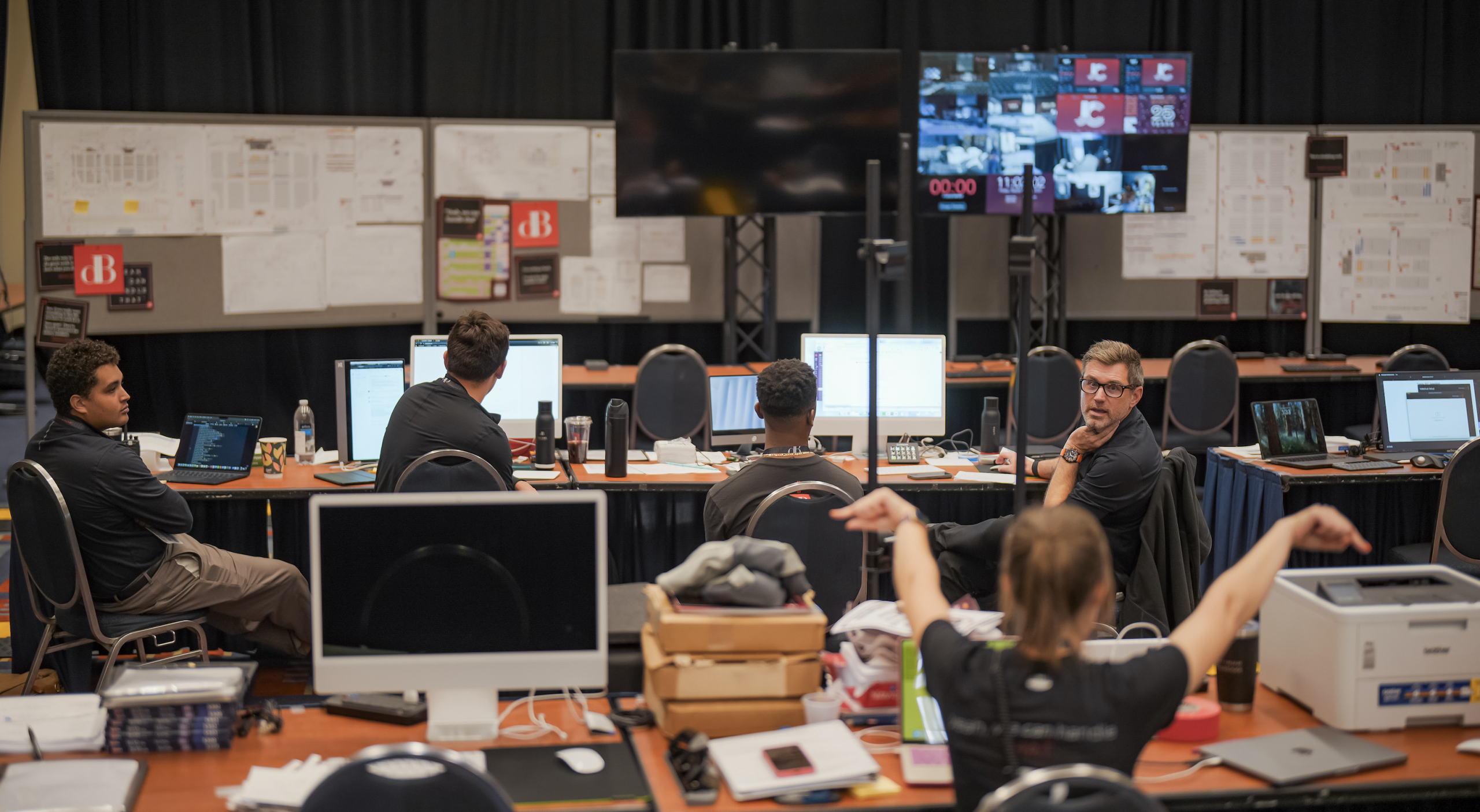
Many production teams record their internal production communications during a show. Professionals call it game tape. Decibel records ours and listens back after every event so we get better. Clients have asked to hear excerpts to understand how we actually operate in the room, and we share them. How a crew talks to each other when the room is hot is the most honest signal you will get. Ask whether they record, and whether they would share a few minutes of it.
The live-observation version of the same question is just as good. Photos and case studies sell a sanitized version of any event. Sitting in the back of the room for twenty minutes during a live show tells you what a year of pitch decks cannot. How the team treats clients under pressure. How they treat each other. Whether the principal you met is actually running the show or has handed it off to a junior team. Whether they look prepared or scrambling.
If a production company will not let you hear the tape or watch a comparable event, that is your answer.
2. The conflict of interest most buyers never see
Many AV rental houses have expanded into production and pre-production work. On the surface they look like full-service producers. In practice, they carry an inherent conflict. They are advising you on what gear you need while also being the company that owns and rents that gear. The advice and the sales pitch come from the same conversation.
This shows up in subtle ways. You will get the package that fits their inventory, not the package that fits your event. You will hear less about alternatives that sit outside their warehouse. You will pay for what they happen to own.
A true third-party producer has no inventory to push. They source what your event actually needs, from whoever has the right kit at the right price, and the relationship runs through them. That is the difference between a vendor and an advocate.
Ask directly: do you own the gear you are recommending? If they do, ask how they manage the conflict. If they cannot answer that cleanly, you have your answer.
3. What is your contingency plan, and what kind of backup do I actually have?
Ask them to walk you through what happens if your keynote cancels twelve hours before, if the venue loses power, or if a vendor no-shows. The quality of the answer tells you whether you are hiring planners or order-takers.
Then go a layer deeper on the technical side. Backups come in three flavors. A hot backup is duplicate gear, powered up and running in parallel, ready to take over in real time. A cold backup is spare equipment in the room, not running, that can be swapped in if something fails. No backup is exactly that. Each model has a budget implication, and buyers commonly trade backup depth for budget on lower-risk segments of a show. That is a reasonable trade, as long as you know which segments you are trading and what the failure cost is.
A good producer will tell you what they recommend, where they would push for hot, and where a cold or no backup is a defensible risk. A weaker one will quote you the cheapest option and not tell you what you traded away.
4. Who is actually in the room when the event is running, and what are they doing there?
This is not just about whether the senior team you met in the pitch shows up. It is about who they show up as.
Is the on-site contact the producer or project manager who has been with you since planning, the person who knows your stakeholders and your hot buttons? Or is it a sales rep or account rep from a rental house whose job is to keep their AV team supplied, not to keep you informed? The distinction matters because their loyalty determines what they do under pressure. A producer who has been with you from kickoff is in the room to manage your event. An account rep from a gear vendor is in the room to manage the gear.
Then go through the role inventory. Do you have a dedicated showcaller? A stage manager? An assistant stage manager? A registration team and a registration lead? A producer? Each of these is a specific function in a working production environment. At Decibel, all of these roles are staffed by senior team members on full-service engagements. Most firms in our category subcontract at least two. If a role is missing from the proposed staffing, either the firm is expecting you to fill it internally or it is not going to be filled at all. Both are fine if you know going in. Neither is fine if you find out the morning of.
5. How do you handle registration at scale?
Registration is the first thing your attendees experience. Long lines, broken check-in, missing badges. These are the moments people remember.
Ask how they handle 500, 1,000, or 2,000 person registration without bottlenecks. Ask who staffs the desk, who owns the data, and what happens when the platform glitches at 7:45 AM. Ask whether registration is a service line they own or a function they subcontract. At Decibel, registration is one of three named service lines and is run by a dedicated registration director. That is not standard in this category. Most production firms treat registration as an afterthought. The buyers who get burned are the ones who find that out at the door.
6. Can I talk to a client who has been with you for ten years?
This is the question most companies cannot answer. Long-term clients are the strongest signal in this category, because corporate event buyers do not stay with vendors who let them down. If a company cannot point to repeat clients across multiple years, ask why.
Decibel can answer this question with the Library of Congress, where we have produced the National Book Festival continuously since 2009. Fourteen years and counting. That is the benchmark to hold any production partner to.
How does a corporate event production company actually charge?
There is no single industry-standard pricing model, which is why it matters that you ask. The companies worth working with will give you a clear, two-part answer.
The first part is how they bill their own time. A clean structure looks like a fixed planning fee, scoped to a set number of pre-production hours, plus transparent onsite rates by person per day, with a defined overtime escalation. A typical event day runs about ten hours before OT kicks in. You should know that number before you sign. You should also know which roles are covered under the day rate and what specifically triggers OT.
The second part is how they bill third-party AV gear. There are two basic models.
Full markup, one bill. The production company contracts the AV vendor, handles payment, carries the operational risk, and bills you a single number with a markup baked in. This is the most common structure. The markup compensates the producer for vendor management, payment terms, and what happens when something breaks.
Client direct, reduced markup. The client contracts the AV vendor directly and the production company carries less of the management and risk. In exchange, the markup on the producer’s side is lower. This model is fine when the client wants the direct relationship, as long as both sides are clear on which side owns what.
Planning fees scale with event complexity, not headcount. A well-scoped Tier 1 strategic engagement (in the $100K range) often saves three to five times its fee in vendor negotiation, scope discipline, and avoided rework. That is the frame to apply when a planning fee feels high. The cost of getting scope wrong on a $500K event is not measured in the planning fee. It is measured in the segments of the event that did not land.
One warning. Do not chase a discount in isolation. Many firms inflate the baseline number so they can give you whatever discount you ask for. A producer who is upfront from the first quote is showing you something important about how they will operate for the rest of the engagement.
What does a properly resourced corporate event actually do for the business?
This is the question buyers often skip, and it is the one that determines whether you are investing the right amount.
The difference between a $250K event and a $500K event is not 2x the cost. It is the difference between an event your attendees tolerate and an event that drives pipeline, retention, recruiting, and earned media for the next twelve months. The line items that close that gap are not glamorous. They are the ones buyers cut first when they are pricing the event as an expense instead of an investment.
A keynote that rattles versus a keynote that gets clipped and shared. The difference is rehearsal time, stage design, and a producer who knows how to coach talent.
Registration that creates a 45-minute line versus registration that runs clean for 2,000 people. The difference is staffing depth and platform investment.
A sponsor experience that gets renewed versus one that gets cut. The difference is brand activation quality, signage, and the small operational details that signal whether sponsors got what they paid for.
A contingency posture that holds versus one that fails on a critical segment. The difference is hot backup on the systems that matter, and the producer judgment to know which ones those are.
Buyers who scope events as cost centers chase discounts. Buyers who scope events as investments ask different questions. They ask what becomes possible at the next tier. They ask which line items return on investment beyond the event itself. They ask which trades are defensible and which ones will be visible to the audience. That conversation is the one a real production partner should be ready to have on the first call.
What should I look for in a high-end event production company?
Five signals separate the shops that handle high-end events well from the ones that do not.
Repeat clients across many years. Longevity is the strongest signal in this category. Corporate event buyers have memory and they have options. When a company has clients who keep coming back across ten, twelve, fifteen years, the work holds up under repeated pressure. Ask for the longest-standing client relationship the company has, and what made it last.
Independence from the gear they recommend. A producer working only for you is fundamentally different from a vendor whose recommendation list overlaps with their inventory list. The first one sources the right gear for your event. The second one sources what they already own. The difference shows up everywhere from the proposal to the room.
Operational depth, not just creative pitch. A polished pitch deck is easy. A clean run-of-show under pressure is hard. Look for companies that can speak fluently about contingency planning, registration logistics, vendor management, and what happens in the ninety minutes before doors open. That is where events actually get won or lost.
Senior people on-site. On a complex corporate event, the senior team should be in the room. At Decibel, the founder is on-site for full-service engagements. That is not standard in this category. If the principals pitch you and then hand you off to a junior team for execution, the risk profile of the event just went up. Ask who runs the show on-site, and whether they were the ones who scoped it.
Willingness to let you see the work in motion. A confident production company will invite you to observe a comparable event before you sign, or share excerpts of how the team actually communicates during a live show. A less confident one will offer you a deck and a sizzle reel instead. The companies that have nothing to hide are the ones that move events with the calm that buyers actually need.
When does it make sense to bring in a corporate event production company?
Four triggers usually drive the decision.
The event is large enough that internal staff cannot run it on top of their regular work. Above a certain attendee count and complexity, the operational load is a full-time job for a team, not a side project for a marketing manager.
The stakes are high enough that the cost of getting it wrong dwarfs the cost of the event. C-suite visibility, board members, major customers, regulators, press. When the audience changes, the risk changes.
The event has technical or security requirements that internal teams are not equipped to handle. Multi-stage AV, live broadcast, secure environments, federal compliance, no-photo policies. These are not learn-on-the-job categories.
The event is strategic enough that getting it right will generate value well beyond the event itself. Pipeline. Retention. Recruiting. Earned media. Executive positioning. When the event is doing work for the business for the next twelve months, the investment math changes. That is the trigger that justifies the top tier of production spend, and the one buyers most often underweight.
What clients say
The Decibel team consistently proves themselves as top-notch professionals. Having Decibel on board always streamlines my job, making it a seamless experience. — Tim Wilson, Trane Technologies
David is one of the most top notch professionals I have ever worked with. His ability to calmly manage, navigate and create an event is flawless. — Alice Lutz, CEO, Triangle Family Services
Frequently asked questions
What is the difference between a corporate event production company and an event planner?
A corporate event production company manages technical production, run-of-show, vendor sourcing, staging, AV, registration, and live execution at scale. An event planner is a broader category that often skews consumer or social. For complex corporate work in the high six-figure to seven-figure range, you want a production company with operational depth, not a planner.
How far in advance should I hire a corporate event production company?
For a major corporate event, six to nine months out is the sweet spot. Twelve months is better for events with venue, talent, or federal compliance complexity. Three months out is workable for a producer who is set up for it, but you will pay for speed and lose some sourcing leverage.
What does a corporate event production company cost?
Service tiers vary by scope. Strategic planning engagements typically start around $100K. Planning plus production teams generally run $250K to $500K. Full-service production for complex events runs $500K to $1M and up. Decibel structures engagements as approximate ranges, not fixed packages, because the right scope depends on the event.
Do I need a separate AV company if I hire a production company?
Not usually. A third-party production company will source and manage AV vendors on your behalf, which is preferable to hiring AV directly and trying to coordinate the production around them. The exception is if you have an existing AV relationship you want to preserve, in which case the production company can work alongside them.
How does Decibel Events approach federal and government work?
Decibel holds a GSA Schedule and has produced events for the Library of Congress, the Department of Defense, the U.S. Small Business Administration, the U.S. Department of Energy, and other federal agencies. Government work has compliance, security, and procurement requirements that most production firms are not set up for. We are.
What makes Decibel Events different from other corporate event production companies in Washington DC?
Three things. Senior team members staff every full-service engagement. We are independent of AV inventory, which means our recommendations are not constrained by what we own. And we have client relationships that run a decade or longer, with the Library of Congress National Book Festival running continuously since 2009.
Ready to scope your next event?
Decibel Events has been producing high-stakes corporate events since 2007. Seventeen years. Seven hundred and sixty-two events. Thirty-five thousand onstage presentations. Fourteen industry awards, including Telly and Silver Anvil recognition, and production credit on the Peabody Award-winning AARP Voices of Civil Rights broadcast coverage.
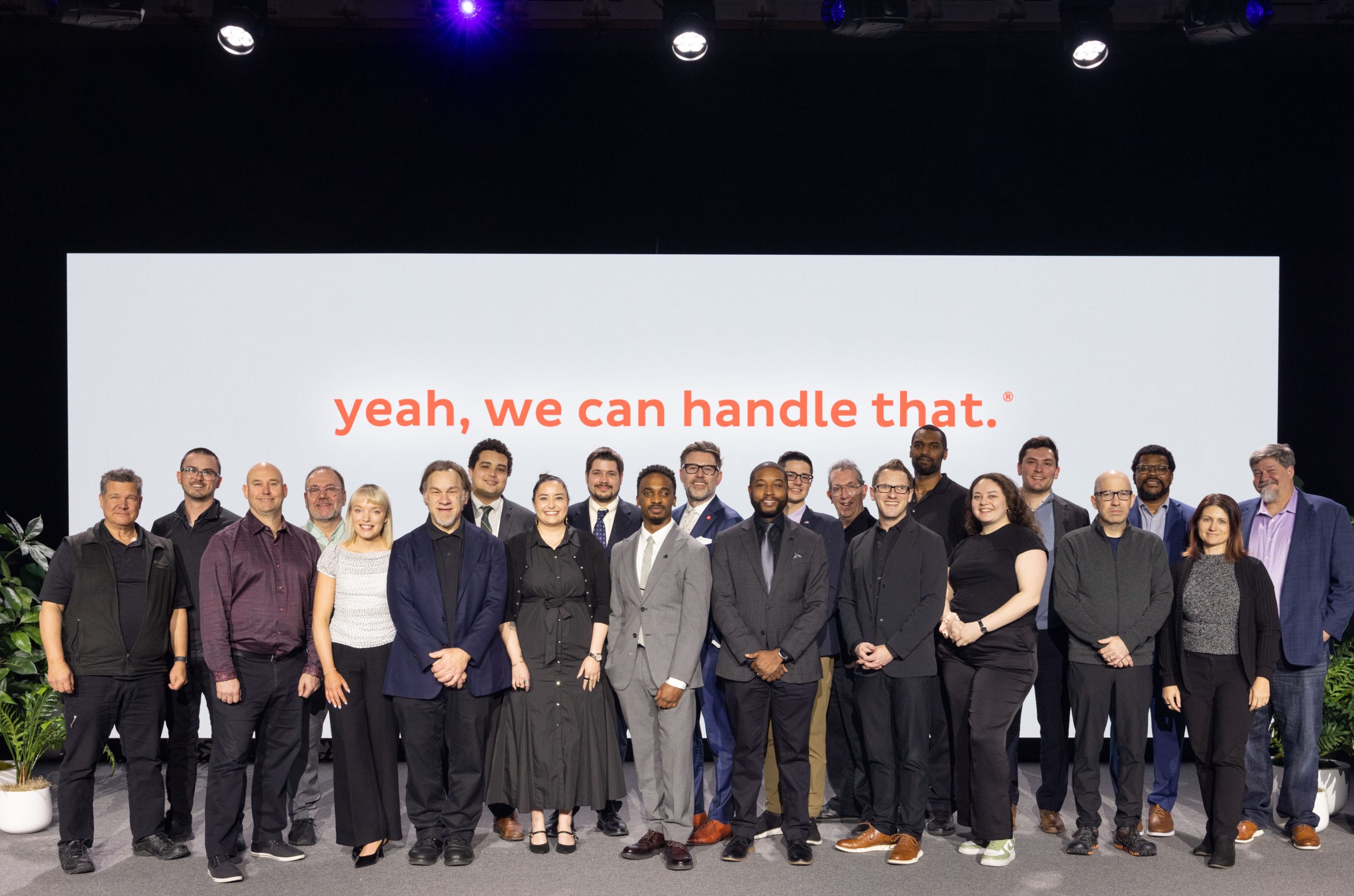
We are a boutique firm by design. The senior team that scopes your event is the team in the room when it runs.
If you are scoping your corporate event in the $250K to $1M+ range, we will give you a one-hour scoping call and a transparent budget framework before you commit to anything. Start the conversation here.
yeah, we can handle that.®