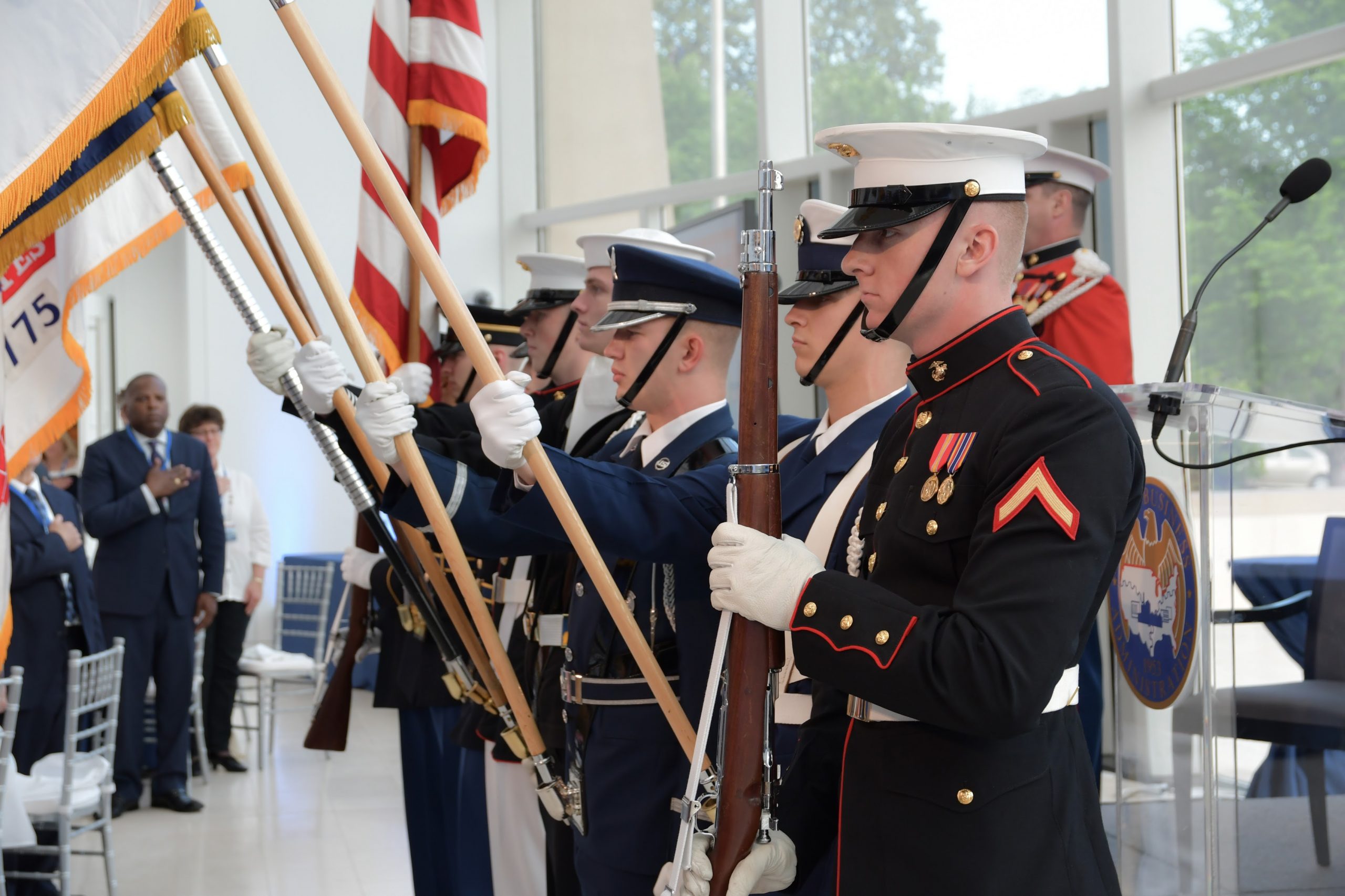
U.S. News ranked Washington DC the seventh best conference city in America. It looked at 52 cities. Las Vegas, Chicago, and Orlando took the top three. Anaheim came in right behind DC at eight.
The methodology is worth reading, because it tells you how they determined their rankings. A quarter of the score is accessibility: how far the convention center is from the airport, how many airports are within 30 miles, the transit score, the walk score, the hotel room count. Another quarter is destination appeal: sights, culture, nightlife, food. Another quarter is meeting space, driven mostly by exhibit square footage in the convention center. The rest is affordability, safety, and sustainability.
Every part of that score measures how easily your attendee gets here and how good a time they have once they arrive. Those are real things to measure. They are not the only thing you should consider when determining if your event will work in DC.
The ranking is accurate. This city is easy to fly into, easy to walk, easy to find sights to see. If that was all that mattered, events here would be a breeze. Planning a DC event is not a challenge because of any of these measures. What makes it a challenge is your attendees, whether that is your audience or your speaking talent. A floor vote gets scheduled for 2pm and your afternoon keynote speaker is gone. Almost every guide to the DC event market opens with permits, load-in, and hotel blocks. Those guides are written by people who have never stood in the back of a ballroom before doors, waiting for a protective detail to release your event space while you rewrite the run of show.
This is what you should be considering when you produce a high-stakes corporate event in DC. It is written for whoever is scoping one. It is also written for the agencies, planning firms, and AV firms whose clients select this market and have to make it work, because you are dealing with the same thing we are.
Is Washington DC a good city for corporate events?
Yes, and for reasons that have nothing to do with why it is hard.
Three airports in reach. A transit system that reaches most venues. Walkable. Deep hotel inventory, though total room count is one of the places DC scores below the cities ranked above it. Museums, monuments, and restaurants your attendees will use on their own time and thank you for. All of that is true, and it is why DC sits near the top of every list like this one.
But those lists rank the city and its amenities. They do not rank your event. What no ranking accounts for is who is in the room. An event with 400 attendees in DC is a DC event. The same event with a keynote speaker from the Administration is a different job, with a different set of rules. That does not show up in a walk score.
What makes Washington DC different from other event production markets?
One thing drives the rest. The audience.
A senior DC guest list (cabinet officials, members of Congress, agency leadership, foreign dignitaries, and the corporate and association leaders who work alongside them) changes the production in four ways you will not find in other markets.
Your speaker calendar is not a calendar. In other markets, a confirmed keynote is a confirmed keynote. In DC, your keynote is a senator whose floor vote just got scheduled during your show, a cabinet official who confirms two weeks out and cancels the morning of, or an agency head whose remarks change overnight because of the news cycle. That is not a planning failure. It is the operating condition of the market, and your production team has to anticipate the potential.
The people in the room bring their own rules. A site visit in a DC ballroom looks like a site visit in any other ballroom. What you also have to consider is the many additional layers that security brings to the table. The protective detail, the magnetometer plans, or the no-photo rule that overrides your sponsor’s entire content plan. None of that is exotic here. It is a normal week.
The federal calendar decides who shows up. Congressional recess, State of the Union week, budget deadlines, inauguration cycles. Most guides show this as an inventory problem, and that is the small version of the reality. The real effect is attendance. Book during recess and the Hill audience is home in their districts. Book during a budget fight and your agency speakers are consumed by it.
What happens onstage can become news. A corporate event in Dallas is a corporate event. A corporate event in DC can be a story. Reporters are part of the professional fabric of this city, and remarks from your event can be online before it ends. That puts decisions in front of you that you will not find in other markets. Here you need to consider whether media is credentialed or excluded, whether sessions run on or off the record, whether photography is permitted at all.
What happens when a government speaker cancels on the day of your event?
This is the part every DC event guide avoids. It is also the part that separates a team that knows what to expect from a team that does not.
Votes get scheduled. Hearings run long. A principal gets pulled into something that outranks your event, and no amount of advance confirmation prevents it. Ask an experienced DC producer about their most challenging moment and the answer is almost never the freight elevator.
A team built for this market treats cancellation as a certainty, not a contingency. In practice, that means four things.
- Backup content produced, loaded, and cued before doors. Not a slide that says thank you for coming.
- Flex points identified in the run of show in advance, so the program can shorten or stretch without the audience seeing the seam.
- An alternate lined up for every official on the agenda, briefed well enough to walk out and be useful.
- A showcaller who can resequence live, and a producer who can rebuild the back half of a program in a hallway twenty minutes before doors.
Your audience should never know it happened. That is the whole job. It is also the difference between a production partner and a rental house.
Do you need a production partner, or do you need a rental?
Most people know the answer before they ask. Almost nobody says it out loud, so we will.
A rental gives you gear and a delivery window. You are still the one making every decision. If your event is one room, one screen, a mic, and a deck, that is the right call and you do not need us. Contract the rental partner and run your show. We will tell you that on the first call.
A production partner owns the outcome. The run of show, the vendors, the venue’s restrictions, the sponsor conversation, the contingency plan, and the overnight phone call when something changed. You are not managing it. You are approving it.
The line between the two is not size. It is who carries the risk. If something changes and your name is on it, you want somebody standing next to you who has done this exact thing before.
The trap is the event in the middle: the one that started as a rental and grew. It is now three rooms, two general sessions, a livestream, and a VIP reception, and it is still being run off a rental quote and a hotel AV order. Every producer in this city has been called into that event at the last minute. It is fixable. It costs more than doing it right the first time.
What event production companies are in Washington DC?
The DC market has a handful of full-service production companies that are equipped to handle a high-stakes corporate event. Some focus on association and nonprofit work. Some focus on federal contracting. Some focus on commercial corporate work. A few work across all three.
Decibel Events is one of them. We are headquartered in DC and we have produced corporate, federal, and association events in this market since 2007. We hold a GSA Schedule. We have produced the Library of Congress National Book Festival continuously since 2009. Several of our clients have been with us for more than a decade, which in this business is the only number that means anything.
We are not the only good option here. The next section is how to tell us apart from the rest of the firms in this market.
What should you look for in a DC event production company?
Start with what matters in any high-end production market. Repeat clients across many years. Independence from the gear they recommend. Operational depth instead of a creative pitch. A senior team on site, not a senior team in the session and juniors on the show. A willingness to let you watch them work before you sign anything.
Then add what is specific to this city.
Ask how they handle a day-of cancellation. Have them walk you through the last time a principal dropped out hours before doors, and what the audience experienced. The quality of that answer tells you more about DC readiness than any capabilities deck.
Comfort in secure and no-photo environments. A growing share of corporate work here involves audiences or content that cannot be photographed, posted, or in some cases discussed. A firm that has only worked open commercial events does not have the reflexes for an event where the sponsor activation has to be rebuilt because of who accepted the invitation.
Relationships with the venues your audience cares about. DC venues are a small world. A producer who has worked them for years knows which catering manager returns calls, which AV restriction at which hotel is actually negotiable, and which loading dock is genuinely the bottleneck the venue promises you it is not. That knowledge is not on a website. It comes from time in the market.
Federal depth, even if your event is not federal. Plenty of firms have produced one event for one agency and put it in the deck. That is not the same as understanding GSA Schedule procurement, clearance coordination, and the documentation discipline federal work demands. If your event has federal elements, this is not optional. If it does not, a firm built to federal standards still brings that rigor to your corporate event, and you will feel it in the paperwork, the contingency plan, and the discipline on the day.
How do permits actually work in DC?
Narrower than the guides claim. Brutal when they apply.
Inside a hotel or a private venue, permits are a small part of the job. You are dealing with the venue’s internal approvals, the fire marshal for capacity and rigging, maybe a bus lane permit, possibly DC Health for food service. The venue’s own lead times matter more than the city’s.
The moment your event touches public space, that changes. Nearly any green space in the DC metro area is federal property. A street closure can require coordination across the District Department of Transportation, the Metropolitan Police Department, the National Park Service, U.S. Park Police, and the Secret Service depending on where your event is. It could also include any number of various agencies with their own security. It can be twice that if a protectee is part of your event or even in the area. Every one of them has its own lead time and its own definition of complete. Federal land adds another layer, with its own application, fee structure, and restrictions on rigging, staging, and audio.
Producers who work here start the permit conversation before the contract is signed. A team who tells you they will handle the permits without first asking which jurisdictions are involved is telling you something.
When does a DC firm beat a national firm, and when does a national firm win?
A DC firm is the right call when the event relies on things only local experience handles. If your guest list includes current or former officials, protocol, detail coordination, and no-photo discipline are local muscle. If your program depends on official speakers, you need a producer who treats day-of cancellation as a certainty and builds the show around it. If the event has federal elements, a DC firm with that experience will be faster and steadier than a national firm learning the rules on your event. And if you need permit work in DC public space or on federal land, local fluency is the difference between an event that happens and one that does not.
The case for a national firm is real too, and we will make it for you. If the event is national in scope with a DC leg, if your production design language is centralized across your whole portfolio, and if your current producer has real DC depth and can handle the audience rather than only the logistics, keep them. You have survived harder load-ins than DC will hand you. What a national playbook does not carry is the detail coordination, the speaker volatility planning, and the calendar fluency. If your producer has those, you are fine. Most do not.
What if you are the agency, the planner, or the AV firm?
Then you already know most of this and we are not going to explain the basics to you. But there is something worth saying plainly, because it never gets said.
We are a production house. We do not originate the concept. If you are the agency, the idea is yours, the client relationship is yours, and it stays yours. If you are the planner, the venue and the contract are yours, and we are not trying to take them. If you are the AV firm, we have probably hired you, you have probably hired us, and both of those should keep happening.
The wall in this business is that everybody assumes everybody else wants their client. Some do. We do not. What we want is the job that outgrew what you can do in house, on the terms you set, with your name still on the front of it.
And if you get handed a DC event with a senior audience and no local depth to draw on, everything above is the part that will bite you. Not the load-in. The room.
Ten questions to ask any producer before you sign a DC eventTake these. Use them on us. Use them on the firm you already have. 1. Walk me through the last time a principal cancelled the day of. How did you handle it and what did the audience see? 2. Who from your team is on site on show day, and what else are they working that week? 3. What is the backup content plan for a keynote cancellation, and when is it built and loaded? 4. Which of my speakers’ offices have you dealt with before? 5. Have you worked this venue? Who is your contact there, and when did you last speak to them? 6. Where are the flex points in this run of show, and how much time can you take out without the audience noticing? 7. If a detail changes the load-in window, who makes that call and how fast do I hear about it? 8. Is the gear you are recommending yours, and what happens to the recommendation if it is not? 9. Which permits do you file, which do I file, and what is the drop-dead date on each? 10. What is the one thing about this event you think is going to go wrong? If the answers are specific, you are talking to a producer. If the answers are vague, you are talking to a salesperson. |
What clients say
“The Decibel team consistently proves themselves as top-notch professionals. Having Decibel on board always streamlines my job, making it a seamless experience.”
Tim Wilson, Trane Technologies
“David is one of the most top notch professionals I have ever worked with. His ability to calmly manage, navigate and create an event is flawless.”
Alice Lutz, CEO, Triangle Family Services
Frequently asked questions
Is Washington DC a good city for corporate events?
Yes. U.S. News ranked it the seventh best conference city in America out of the 52 cities it evaluated, scoring on accessibility, destination appeal, meeting space, affordability, and safety. DC has three airports in reach, strong transit, and deep hotel inventory. What no ranking measures is the audience, which is the thing that makes a DC event harder to produce than the same event anywhere else.
What event production companies are in Washington DC?
A handful of full-service firms handle high-stakes corporate work in DC. Decibel Events is one of them, founded in 2007, a GSA Schedule holder, producing for federal agencies, associations, and Fortune 500 clients. Other firms in this market specialize in different segments, including association-only, federal-only, and creative-led production.
Do I need a DC-based production company for a DC event?
For most high-stakes corporate work in DC, yes. Detail coordination, speaker contingency planning, venue relationships, and federal compliance experience are local disciplines. A national firm without deep DC experience will learn parts of this on your event.
What happens if a government speaker cancels on the day of my event?
With the right production partner, your audience never experiences a delay. Backup content is produced and loaded before doors, flex points are built into the run of show, alternates are identified for every official on the agenda, and the showcaller resequences the program live. In DC this is standard practice, not an emergency response.
Do I need a permit for an event in Washington DC?
It depends on where it is. Inside a hotel or private venue, permits are limited to the venue’s approvals, the fire marshal, and possibly DC Health for food service. The moment you touch public space, which is nearly any green space in the DC metro area, you may be coordinating across the District Department of Transportation, the Metropolitan Police Department, the National Park Service, U.S. Park Police, and the Secret Service. Federal land adds its own application and restrictions. Start that conversation before you sign anything.
How far in advance should I book a DC event production company?
Nine to twelve months is the range for major corporate events, especially ones involving federal venues, official speakers, or street closures. Six months works for hotel-based events with no public space component. Less than six months is possible, and it narrows your venue options considerably.
What size events does Decibel Events produce?
Our corporate work generally runs from $250K to $2M and up. Below that, a rental or a smaller shop is usually the better answer, and we will tell you so.
Does Decibel Events work outside Washington DC?
Yes. We are headquartered in DC and we have produced events across the country and internationally. DC and the federal market are our home base. Our production expertise travels.
Can Decibel Events handle a no-photo or secure environment?
Yes. We work regularly in NDA, no-photo, and security-overlay environments for federal, defense, and private corporate clients. The processes are built in, not improvised on the event.
Ready to scope your next DC event?
Decibel Events has produced high-stakes corporate events in Washington DC since 2007. A GSA Schedule. Federal agency engagements across multiple departments. The Library of Congress National Book Festival, continuously since 2009.
If you are scoping a corporate event in DC in the $250K to $2M and up range, we will give you a discovery session and a clear budget framework before you commit to anything. If we are not the right firm for it, we will say so and point you toward who is.
Start the conversation here.