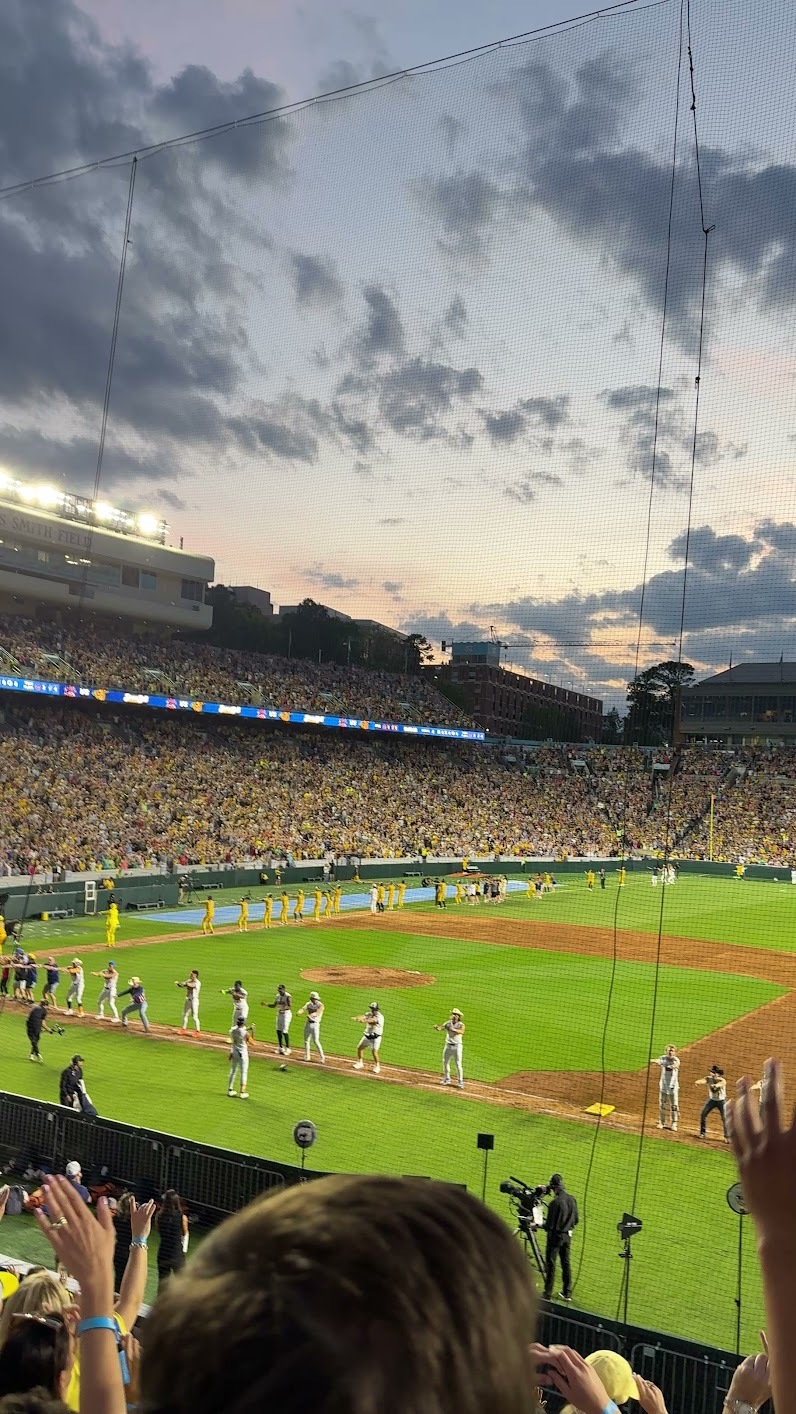
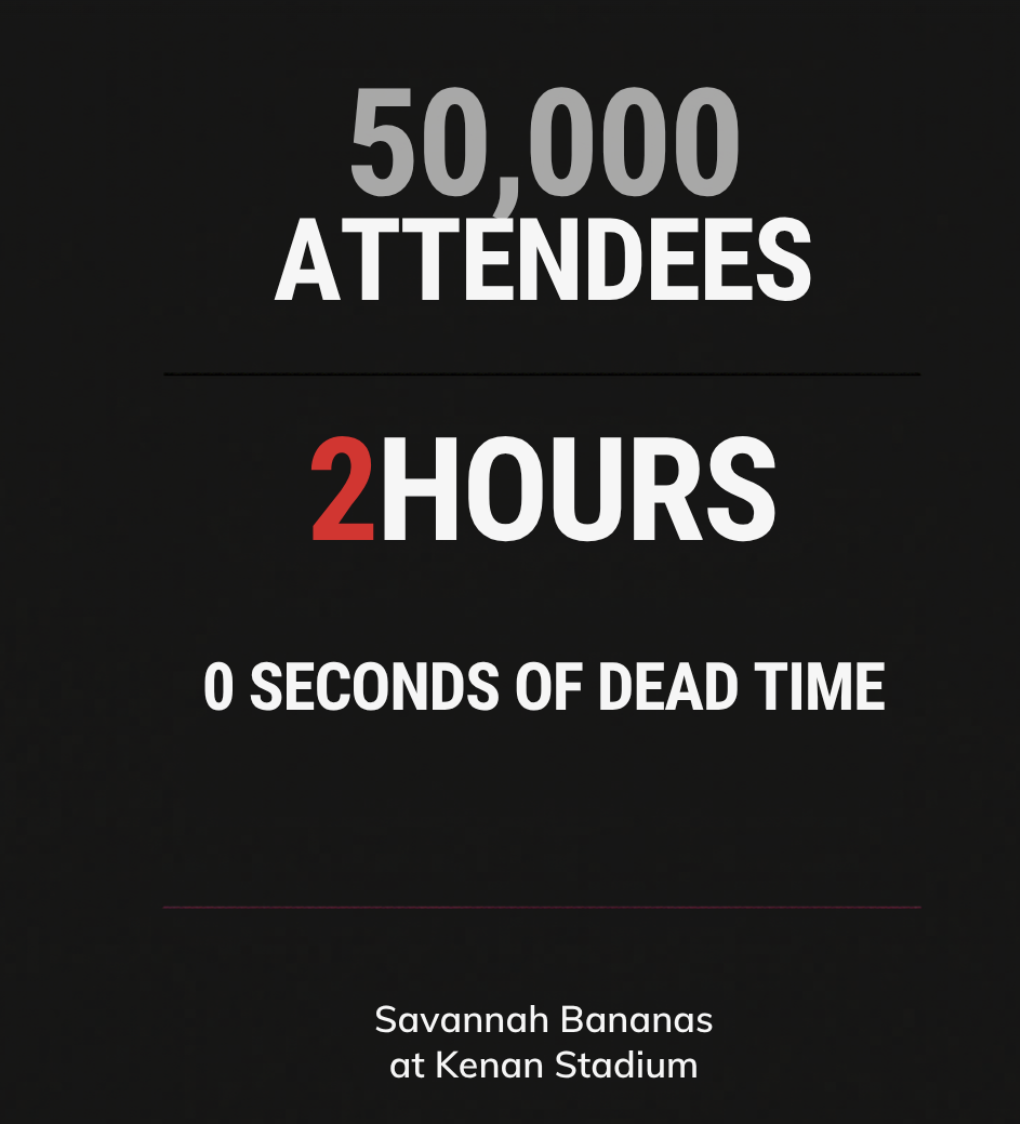
On Saturday night, I stood in Kenan Stadium in Chapel Hill with 50,000 other people and watched a baseball game where nobody cared about the score.
That is not hyperbole. The Savannah Bananas, Jesse Cole’s traveling spectacle of entertainment-first baseball, held that entire stadium for two straight hours with a show so relentless, so tightly scripted, and so deliberately overstimulating that it did not even feel like a sporting event. It felt exactly like scrolling through social media at full speed. Every second was filled. Every gap between innings became a vignette. Dance routines between batters. A sing-along. An audience interaction bit (many, many interaction bits). A content capture moment. Players filming TikToks between at-bats. PAs and crew hustling and sprinting between marks. The whole thing felt like Everything Everywhere All At Once staged on a baseball diamond, in a football stadium, on tour.
I have spent 20 years in event production. I have produced events inside the White House, the State Department, the Supreme Court, for the Library of Congress, the Department of Defense, and Fortune 500 corporations. I was a Vice President at FleishmanHillard running national event programs before I founded Decibel Events. I have served as lead site advance on a presidential campaign, managing event production across the United States for over 300+ travel days where a single mistake makes the evening news. I say all of that not to impress you, but to give you context for what I am about to say: standing in that stadium, watching Jesse Cole’s operation execute, I saw the future of live events. And most corporate event managers are not ready for it.
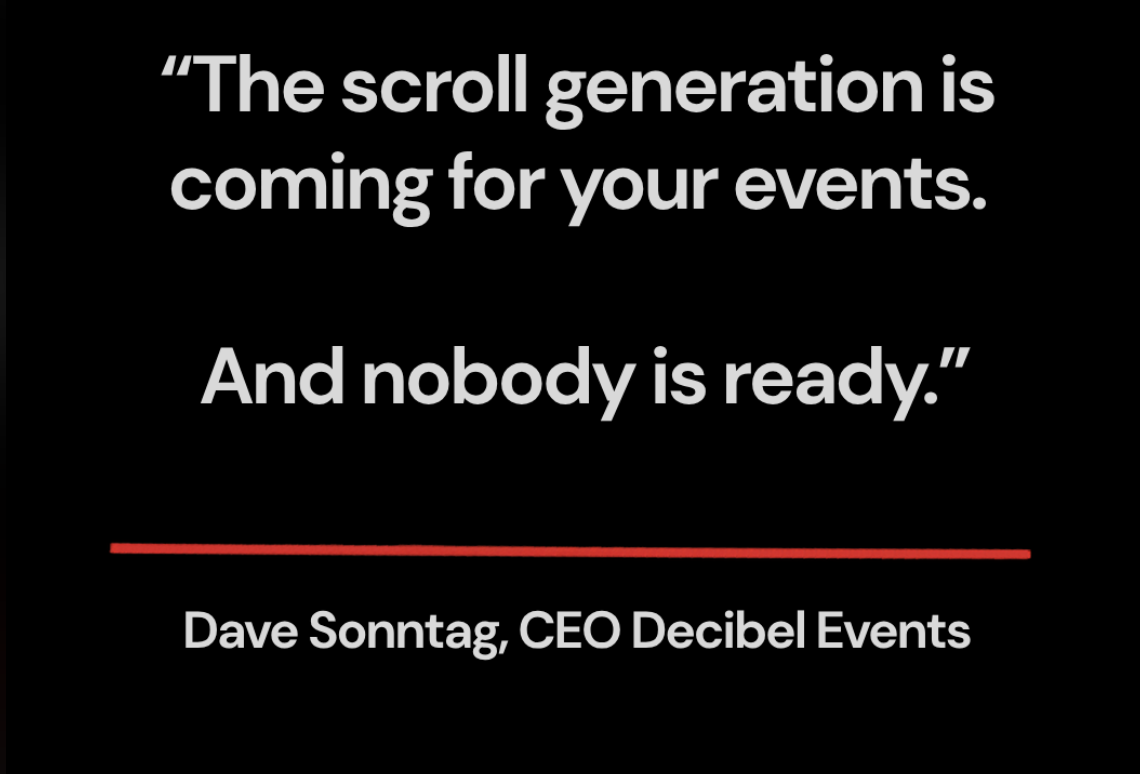
Not because you should turn your annual conference into a circus. But because Cole did not build the Bananas to be weird. He built the first major live entertainment model designed specifically for the way a new generation consumes content. Rapid, overlapping, dopamine-driven bursts with zero tolerance for dead time. That generational shift is not a future problem. They are entering your attendee base, your workforce, and your client organizations right now. The question is not whether the expectations for corporate events will change. They already have. The question is whether your events and your event partners are ready.
In today’s blog I will break down what the Bananas model reveals about where live events are headed, the specific tactics corporate event managers should adopt, which elements belong at the ballpark which you can bring into your boardroom, and why this shift should fundamentally change how you think about your event strategy. I am also planning a longer follow-up piece that goes deeper into the generational data and the specific format changes coming for our industry. Consider this your advance warning – you are not ready.
The Scroll Generation: The Single Biggest Disruption Facing Corporate Events
I want to be clear about something. This is not one observation among many. This is the thesis. Everything I have seen supports it.
Your Next Attendees Were Raised on the Scroll
The best way I can describe the entire Savannah Bananas experience is that it was like scrolling on social media, live and in person, at stadium scale. For two hours, there was no pause. The script and show were built for an attention span shaped by screens. Short music clips cycling every thirty seconds or less, non stop for hours. Vignettes overlapped so it was physically impossible to catch them all at once. Content layered on content with the rapid-cut pacing of a TikTok feed brought to life. It was overstimulation by design. And the crowd, especially the younger half, did not just tolerate it. They expected it. They embraced it. They lived it. They were built for it.
Here is the part that should concern every corporate event director reading this. The kids and young adults who were singing along to Taylor Swift’s whole catalog, back album bangers and new-to-me-sing-a-longs like “It’s Raining Tacos” at that game are not staying kids. They are aging into your attendee base. Within five to ten years, the majority of people sitting in your conference sessions, staffing your trade show booths, and attending your corporate meetings will have been born into an attention economy shaped by algorithmic content feeds, short-form video, and infinite scroll. Their baseline expectation for pacing, visual stimulation, and engagement is not a preference they can turn off when they put on a lanyard. It is neurological. It is how their brains were trained to process information from childhood. And it is fundamentally incompatible with the way most corporate events are currently designed.
Most Corporations Are Not Even Having This Conversation
Here is what concerns me most. Most corporate event programs are still built on a format that has not meaningfully changed in twenty years. A series of sessions. Keynotes, panels, breakouts. Separated by unscripted gaps. Delivered in conference rooms with minimal production value. Held together by the assumption that attendees will sit still and pay attention because the content is important enough. It is locked in through decision-by-committee and from staff unwilling to challenge the c-suite and take calculated risks and adjust to the new reality.
That assumption is already failing. I see it at events constantly. Watch any conference audience right now. Count how many people are on their phones thirty minutes into a keynote. Notice how the hallways fill during afternoon breakout sessions. Look at the post-event surveys that consistently flag “session fatigue” and “engagement” as top concerns. These are not isolated complaints. They are early indicators of a structural mismatch between how events are built and how audiences actually process information.
Now imagine that same format five years from now, when the median attendee grew up consuming content in seven-second bursts. The math does not math. And most organizations, particularly large corporations with entrenched event formats and legacy vendor relationships, are not even beginning to have this conversation. They are still debating whether to push a minor update to their networking app, not whether their entire session format needs to be reimagined from the ground up.
This Is About Production Rigor, Not Dumbing Down
I know the instinct many senior event managers will have reading this. Resistance. “Our content is serious.” “Our audience is sophisticated.” “We are not a baseball game.” All of that is true. And all of it misses the point.
The scroll generation’s expectation for pacing and engagement does not mean your content needs to be less substantive. It means your content needs to be delivered with dramatically higher production value. Scripted transitions. Curated music. Visual pacing. Shorter, tighter sessions with built-in interaction. Designed breaks where every moment is intentional. The substance stays. The production quality catches up to where your audience already is.
I have been producing corporate events for 17 years now. More than 2,500 events across government, Fortune 500, and association clients. The events that hold attention in 2026 are not the ones with the biggest budgets. They are the ones with the tightest scripts, the most intentional pacing, and a production team that understands the difference between filling time and designing an experience. That gap between “filling time” and “designing experience” is about to get much, much wider.
The Business of Bananas: How Jesse Cole Built a Blueprint
Understanding what the Bananas do is useful. Understanding why it works is what matters, because the underlying logic is exactly what corporate events need to adopt.
Think Circus, Not Baseball
The best way to think about what Jesse Cole has built is to forget baseball entirely and think of it as a modern traveling circus. Cole is P.T. Barnum. He is the ringmaster. The Savannah Bananas are the spectacle. The players are the variety acts. The game itself is just the structural framework that holds the show together, the same way a circus ring gives shape to an evening of acrobatics, comedy, and audience participation. Swap out the animal acts for the spectacle of a team sport, and you have the model.
His company, Fans First Entertainment, has grown this into six teams and a national touring operation. It is the traveling circus model at scale. And it works because every single decision is made from the audience’s perspective first. Not the league’s. Not the broadcaster’s. Not the sponsor’s. The fans. That “fans first” philosophy is not a slogan. It is an operating system. And it is why 50,000 people showed up to watch a game where the final score was an afterthought.
The Full Script Is the Secret
Here is the thing that impressed me most as a producer. Every staff member at that Bananas game was working from a detailed show script. PAs were hustling between marks on cue. Players were executing entertainment bits between (and even during) at-bats. The entire organization was operating as a single coordinated production unit. It was visible. The energy, the precision, the seamlessness. All of it came from the script.
This is what separates professional event production from just planning events. A script is not a schedule. A schedule tells you what happens at 2:15 PM. A script tells every person in the building what they are doing at 2:15, what cue triggers it, what music plays under it, what the backup plan is, and how it transitions into 2:16. The Bananas rehearse their show. They rehearse a baseball game. I have been preaching the value of rehearsals for my entire career, and watching Cole’s team execute validated everything I believe about how live events should be run.
Two Hours, Not a Minute More
Cole caps Banana Ball games at two hours. His philosophy is simple. Good content, get your day back. Shorter and more intense beats longer and meandering. The audience leaves wanting more, not checking their watch.
This is not directly transferable to a multi-day corporate conference. But the principle behind it absolutely is. Every individual session in your event should earn its time slot. If your keynote cannot hold attention for sixty minutes, make it forty. If your panel runs out of energy at thirty minutes, do not pad it to sixty. Respect your attendees’ time the way Cole respects his fans’ time. They will notice, and they will come back.
The generation raised on the scroll does not give you their attention by default. You earn it every thirty seconds, or you lose it to the phone in their pocket.
Tactics to Take With You: What Translates to Corporate Events
The Bananas are entertainment-first. Your events are business-first. But several core production tactics translate directly, and ignoring them means your events will feel increasingly dated to your audiences.
Script Every Transition, Not Just Every Session
Most corporate events script the sessions and leave everything else to chance. The Bananas script everything, including and especially the transitions. The walk-on music. The emcee handoff. The sixty seconds between one act ending and the next beginning.
For your corporate event, this means scripting the five minutes between your keynote ending and your breakout sessions starting. It means having music, visuals, and emcee cues that carry attendees from one moment to the next without a dead gap where they reach for their phones. This is core event management work, and it is the single fastest way to elevate any existing event format without changing a single session on your agenda.
Use Music as a Production Element, Not Wallpaper
The Bananas use music the way a film uses a soundtrack. It sets pace, triggers emotion, and cues audience behavior. “It’s Raining Tacos” was a massive crowd sing-along. Kids lost their minds. “Jingle Bell Rock,” completely out of season, completely wrong for a warm-weather baseball game, got the entire stadium singing because the song is fun and familiar.
The lesson for corporate events is simple. Do not be precious about thematic consistency if the element drives engagement. Music in corporate events is almost always underused. Curate it for energy. Time it to transitions. Select tracks for participation potential. I have seen a well-chosen walk-up song for a keynote speaker completely change the energy of a room. This is low-cost, high-impact, and it transforms the feel of an event from “conference” to “experience.”
Design Audience Interaction Into Your Run of Show
The Bananas brought fans (or at least fan attention) onto the field constantly. Balls tossed into the stands. Sing-alongs with the whole stadium. Audience interaction was not a fun extra. It was a core production element, scripted into the run of show with specific cues and timing.
At a corporate scale, this means rethinking how your sessions are structured. Polling, live Q&A, audience challenges, on-stage participation, gamified elements. All designed in advance, not bolted on. The Bananas proved this works at 50,000 people. I can tell you from experience it works at 500 too. Attendees who participate remember more, stay longer, and rate your event higher. It is one of the most reliable levers you have.
Embed Content Capture Into the Live Experience
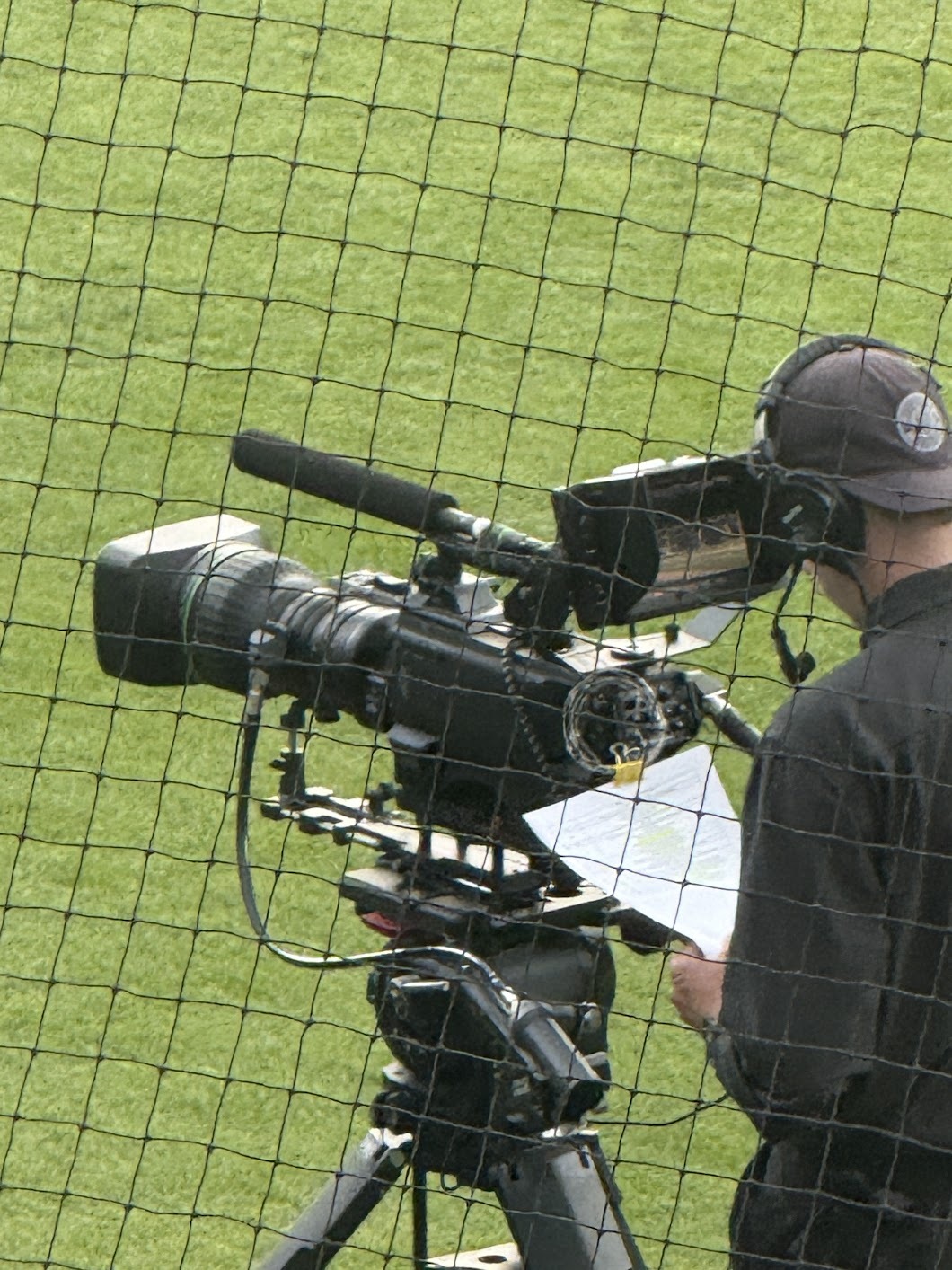
This one surprised me. At the Bananas game, the players were filming content during the game. Staff were capturing vignettes for social media in real time. Content production was not a post-event deliverable. It was part of the show itself.
Your corporate event is not just a live experience for the people in the room. It is a content engine for your brand for the next six to twelve months. That means designing moments that look compelling on camera, building content capture into your event production plan, and briefing your speakers on their role in creating shareable moments. If content is an afterthought, you are leaving enormous value on the table. The Bananas understand that every live moment is also a digital asset. Corporate events need to catch up.
What to Leave at the Ballpark
I want to be honest about this part too, because not every element of the Bananas model belongs in a corporate environment. Knowing the difference is what separates smart adaptation from gimmickry.
Overstimulation Has a Ceiling in Professional Settings
The Bananas show was built for maximum overstimulation. Overlapping vignettes, constant music, nonstop visual activity. For a two-hour entertainment event with families, this is brilliant. For a three-day corporate conference where attendees need to absorb complex information, make decisions, and have substantive side conversations, unchecked overstimulation will backfire.
The lesson is not “make your conference feel like TikTok.” The lesson is “eliminate dead time and script your transitions with intention.” Your attendees still need space to think, network, and process. Those spaces should be designed, not accidental. But they should exist. The best events I have produced over the years balance high-energy produced moments with intentional breathing room. You need both.
Spectacle Cannot Replace Substance
The Bananas can afford to be all spectacle because the “content” is baseball. Inherently simple. Your corporate event exists to deliver real business value. Industry insights, networking, strategic alignment, product education. Spectacle is the vehicle for delivering that substance in a way that holds modern attention. It is not a substitute for the substance itself.
The worst possible takeaway from the Bananas would be to invest in entertainment elements while gutting the quality of your programming. The best takeaway is to keep your content sharp and surround it with production rigor that ensures your audience is actually present, focused, and engaged when that content is delivered.
The Leadership Signal: Jesse Cole on the Floor
One detail from the Bananas show that deserves its own section. Jesse Cole was on the field. Not in a suite. Not in a green room. He was interacting with fans, visible to the crowd, embedded in the experience he built. And it was not just Cole. The whole team was the show. Every PA, every usher, every player operating as one coordinated unit with shared energy and shared purpose.
I noticed this because it is exactly how I believe events should be run. At Decibel Events, senior leadership is on-site for every event. I am not the kind of CEO who sells the project and disappears. My background, from managing presidential campaign logistics across 300+ travel days to running national event programs at FleishmanHillard, taught me that the leader sets the standard by being present. When your team sees the person in charge on the floor, sweating the details alongside them, the quality of execution goes up across the board. When you evaluate an event management company, ask who will be on the ground during your event and what their experience level is. That question will tell you everything you need to know.
“The Decibel team consistently proves themselves as top-notch professionals… Having Decibel on board always streamlines my job, making it a seamless experience.” — T. Wilson, Trane Technologies
What Comes Next: The Follow-Up You Need to Read
This article is the first in a series. The Savannah Bananas gave us a visceral, 50,000-person demonstration of where live experiences are headed. But the implications for corporate events go much deeper than production tactics borrowed from a baseball circus.
The follow-up piece will dig into the generational data. How screen-native attention patterns are reshaping what “engagement” actually means at corporate events. Why legacy event formats are structurally mismatched with the incoming workforce. What specific format changes forward-thinking organizations are already testing. And what event managers over forty, myself included, need to understand about an audience that processes information fundamentally differently than we do.
If you manage corporate events for a living, that piece should be on your reading list. This shift is not ten years away. It is happening in your next event cycle. The organizations that adapt will create events people actually want to attend. The ones that do not will wonder why their attendance numbers keep declining and their post-event surveys keep getting worse.
Work With a Production Team Built for What Comes Next
I did not watch the Savannah Bananas and see a novelty act. I saw a team executing at an elite level because they script, rehearse, and produce with the same rigor we bring to corporate events at Decibel. The difference is that Cole is doing it for entertainment, and we do it for Fortune 500 companies, federal agencies, and national associations where the stakes are higher and the margin for error is zero.
Decibel Events has spent 17 years and more than 2,500 events building the production expertise that makes this kind of experience possible in a corporate setting. From trade show productions to full-scale conferences, our team brings senior-level producer and director leadership, comprehensive scripting, and a commitment to creating events your attendees will actually remember.
If you are starting to think about how your events need to evolve, let’s have that conversation.