
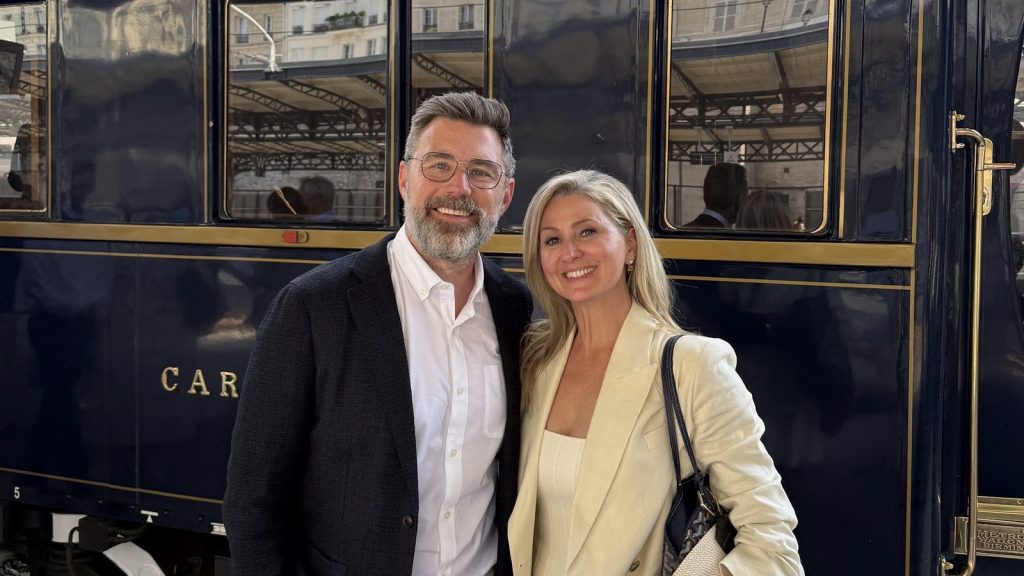
Protected: The Venice Simplon-Orient-Express Private Charter: A Corporate Buyout Guide for Event Producers Looking for the World’s Most Exclusive Venue
There is no excerpt because this is a protected post.
Event Production in Washington DC: What the Rankings Do Not Measure
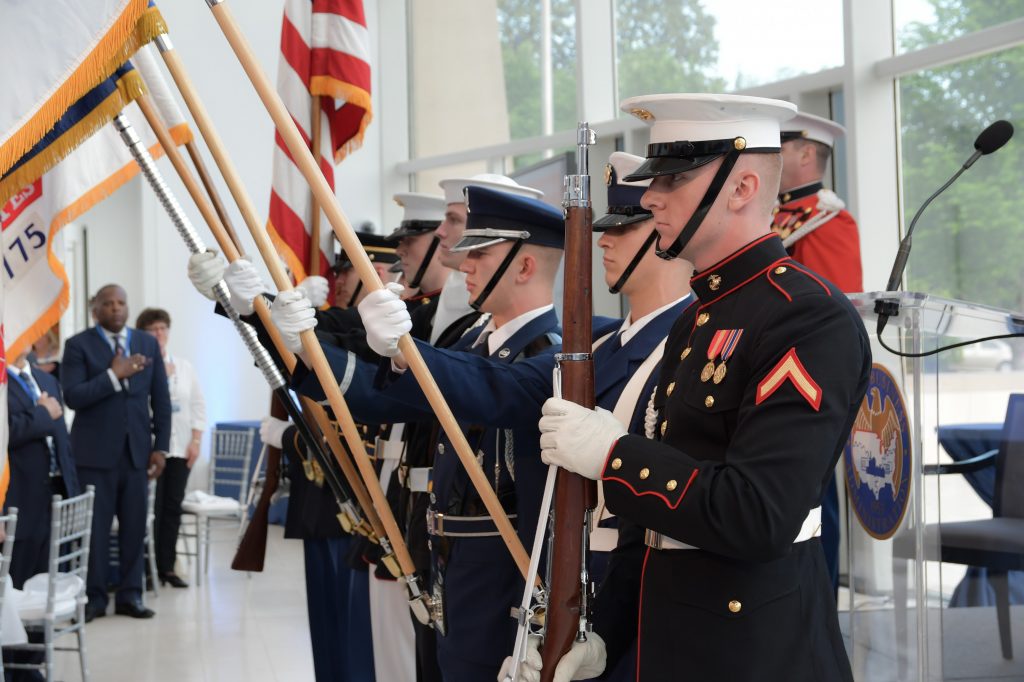
U.S. News ranked Washington DC the seventh best conference city in America. It looked at 52 cities. Las Vegas, Chicago, and Orlando took the top three. Anaheim came in right behind DC at eight. The methodology is worth reading, because it tells you how they determined their rankings. A quarter of the score is accessibility: how far the convention center is from the airport, how many airports are within 30 miles, the transit score, the walk score, the hotel room count. Another quarter is destination appeal: sights, culture, nightlife, food. Another quarter is meeting space, driven mostly by exhibit square footage in the convention center. The rest is affordability, safety, and sustainability. Every part of that score measures how easily your attendee gets here and how good a time they have once they arrive. Those are real things to measure. They are not the only thing you should consider when determining if your event will work in DC. The ranking is accurate. This city is easy to fly into, easy to walk, easy to find sights to see. If that was all that mattered, events here would be a breeze. Planning a DC event is not a challenge because of any of these measures. What makes it a challenge is your attendees, whether that is your audience or your speaking talent. A floor vote gets scheduled for 2pm and your afternoon keynote speaker is gone. Almost every guide to the DC event market opens with permits, load-in, and hotel blocks. Those guides are written by people who have never stood in the back of a ballroom before doors, waiting for a protective detail to release your event space while you rewrite the run of show. This is what you should be considering when you produce a high-stakes corporate event in DC. It is written for whoever is scoping one. It is also written for the agencies, planning firms, and AV firms whose clients select this market and have to make it work, because you are dealing with the same thing we are. Is Washington DC a good city for corporate events? Yes, and for reasons that have nothing to do with why it is hard. Three airports in reach. A transit system that reaches most venues. Walkable. Deep hotel inventory, though total room count is one of the places DC scores below the cities ranked above it. Museums, monuments, and restaurants your attendees will use on their own time and thank you for. All of that is true, and it is why DC sits near the top of every list like this one. But those lists rank the city and its amenities. They do not rank your event. What no ranking accounts for is who is in the room. An event with 400 attendees in DC is a DC event. The same event with a keynote speaker from the Administration is a different job, with a different set of rules. That does not show up in a walk score. What makes Washington DC different from other event production markets? One thing drives the rest. The audience. A senior DC guest list (cabinet officials, members of Congress, agency leadership, foreign dignitaries, and the corporate and association leaders who work alongside them) changes the production in four ways you will not find in other markets. Your speaker calendar is not a calendar. In other markets, a confirmed keynote is a confirmed keynote. In DC, your keynote is a senator whose floor vote just got scheduled during your show, a cabinet official who confirms two weeks out and cancels the morning of, or an agency head whose remarks change overnight because of the news cycle. That is not a planning failure. It is the operating condition of the market, and your production team has to anticipate the potential. The people in the room bring their own rules. A site visit in a DC ballroom looks like a site visit in any other ballroom. What you also have to consider is the many additional layers that security brings to the table. The protective detail, the magnetometer plans, or the no-photo rule that overrides your sponsor’s entire content plan. None of that is exotic here. It is a normal week. The federal calendar decides who shows up. Congressional recess, State of the Union week, budget deadlines, inauguration cycles. Most guides show this as an inventory problem, and that is the small version of the reality. The real effect is attendance. Book during recess and the Hill audience is home in their districts. Book during a budget fight and your agency speakers are consumed by it. What happens onstage can become news. A corporate event in Dallas is a corporate event. A corporate event in DC can be a story. Reporters are part of the professional fabric of this city, and remarks from your event can be online before it ends. That puts decisions in front of you that you will not find in other markets. Here you need to consider whether media is credentialed or excluded, whether sessions run on or off the record, whether photography is permitted at all. What happens when a government speaker cancels on the day of your event? This is the part every DC event guide avoids. It is also the part that separates a team that knows what to expect from a team that does not. Votes get scheduled. Hearings run long. A principal gets pulled into something that outranks your event, and no amount of advance confirmation prevents it. Ask an experienced DC producer about their most challenging moment and the answer is almost never the freight elevator. A team built for this market treats cancellation as a certainty, not a contingency. In practice, that means four things. Backup content produced, loaded, and cued before doors. Not a slide that says thank you for coming. Flex points identified in the run of show in advance, so the program can shorten or stretch without the audience seeing the
Decibel Events Ranked #17 on Washington Business Journal’s 2026 List of Largest Meeting and Event Planners
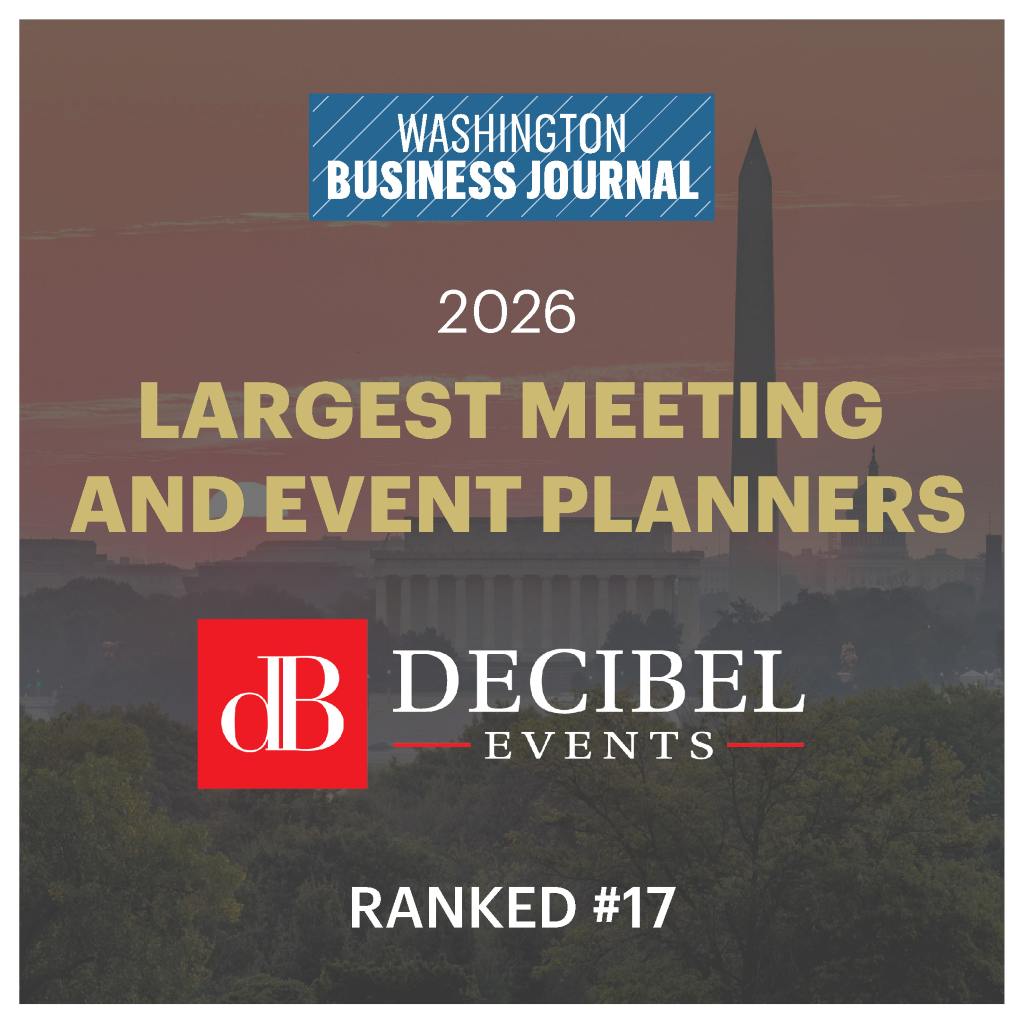
Decibel Events is proud to announce that we have been ranked #17 on the Washington Business Journal’s 2026 list of the Largest Meeting and Event Planners in Greater Washington. This annual ranking, published on February 20, 2026, recognizes the top 24 event planning and production companies serving the Washington, DC metropolitan area, ranked by the number of metro-area events produced in 2025. This is not a one-time appearance. Decibel Events has been continuously listed on the Washington Business Journal’s Largest Meeting and Event Planners ranking every year since 2019, reflecting our sustained growth and the consistent trust our clients place in our team year after year. About the Washington Business Journal Ranking The Washington Business Journal is the leading business publication covering the Greater Washington, DC economy. Each year, the WBJ publishes “The List” — a data-driven ranking of companies across key industries. The 2026 Largest Meeting and Event Planners list evaluated firms based on metro-area events produced in 2025, total events, largest event attendance, revenue, and employee count. Decibel Events produced 30 metro-area events and 60 total events in 2025, with the largest single event drawing 50,000 attendees. Our 2025 metro-area revenue reached $3.25 million, and we operate with a dedicated team of 8 full-time professionals led by CEO David Sonntag. Who Is Decibel Events? Decibel Events is a full-service event production, design, and management company headquartered at 650 Massachusetts Ave NW, Suite 600, Washington, DC 20001. Founded and led by David Sonntag, Decibel Events brings unmatched passion and expertise in event production, public relations, high-level political advance, graphics, and seamless implementation. Our core services include event production, trade show production, event management, AV production, scenic design and fabrication, virtual events, video production, and creative content development. We serve clients across government, corporate, association, and nonprofit sectors. Notable Clients and Experience Since 2009, Decibel Events has served as the event producer for the Library of Congress National Book Festival. We have also produced events for the U. S. Department of Defense, U.S. Department of Energy, T. Rowe Price, Trane Technologies, Amtrak, and numerous high-profile government and corporate clients. Our events range from intimate executive gatherings to large-scale festivals with tens of thousands of attendees. Awards and Recognition Decibel Events and its leadership have earned seven Silver Anvil Awards, eleven Telly Awards (Gold, Silver, and Bronze), two PR Week Awards, and many others. These honors reflect our commitment to excellence in event production and storytelling. How to Work With Decibel Events Every event is different, and we tailor our scope to match your goals, audience, and budget. To give prospective clients a general sense of how engagements are typically structured, we offer three service tiers. The figures below are approximate starting points based on what our clients most commonly require — not fixed packages. We regularly customize engagements above, below, and across these tiers to fit the specific needs of each project. Strategic Planning (typically starting around $100K and up): Your event, powered by Decibel’s planning expertise. This tier typically includes an executive producer, project manager, timeline development, vendor coordination, and budget tracking. Ideal for organizations that have some internal event resources but need experienced strategic leadership to guide the process. Planning + Production Team (typically in the range of $250K–$500K): Everything in Strategic Planning, plus a scaled onsite production team. This often includes a showcaller, stage manager, creative director, and production assistants. This tier is well-suited for conferences, galas, and multi-day events that require both pre-production planning and day-of execution support. Full Service Production (typically $500K–$1M+): Turnkey production from concept to strike. This generally encompasses AV production, scenic design and build, video content, digital signage, photography, videography, and full vendor management. Designed for large-scale events, festivals, and high-profile productions where Decibel serves as the single point of accountability for every detail. These ranges reflect typical client engagements and are intended as general estimates. We encourage prospective clients to reach out for a conversation — we can scope a solution for virtually any event size, complexity, or budget. Contact Decibel Events Ready to discuss your next event? Contact Decibel Events: Phone: 703.953.4493 Email: David@DecibelEvents.com Website: DecibelEvents.com Address: 650 Massachusetts Ave NW, Suite 600, Washington, DC 20001 Frequently Asked Questions What is the Washington Business Journal Largest Meeting and Event Planners list? It is an annual ranking published by the Washington Business Journal that identifies the top meeting and event planning companies in the Greater Washington, DC area based on the number of metro-area events produced, total events, attendance figures, revenue, and staffing. What is Decibel Events’ ranking on the 2026 list? Decibel Events is ranked #17 on the 2026 list. We have appeared on this list continuously every year since 2019, making us one of the most consistently recognized event production companies in the Washington, DC metro area. How many events did Decibel Events produce in 2025? We produced 30 metro-area events and 60 total events in 2025. Our largest single event attracted 50,000 attendees. What services does Decibel Events offer? Decibel Events provides full-service event production, trade show production, event management, AV production, scenic design and fabrication, video production, virtual event hosting, creative content development, and speech writing. We handle everything from initial concept through post-production. How do I work with Decibel Events? What does it cost? We offer three general service tiers to help prospective clients understand how engagements are typically structured. Strategic Planning typically starts around $100K and up and provides planning expertise with an executive producer and project manager. Planning + Production Team engagements typically fall in the range of $250K–$500K and add a full onsite production crew. Full Service Production typically ranges from $500K to $1M or more and delivers turnkey production from concept to strike. These are approximate figures based on common client needs — not rigid packages. We regularly customize engagements to fit specific budgets and event requirements at any scale. Contact us at David@DecibelEvents.com or 703.953.4493 to discuss your event. Where is Decibel Events located? Our headquarters is at 650 Massachusetts
Protecting Your Hearing in Live Events: What Our Team Looks for in Ear Protection (and a Hands-On Look at Vibes Hi-Fi Earplugs)
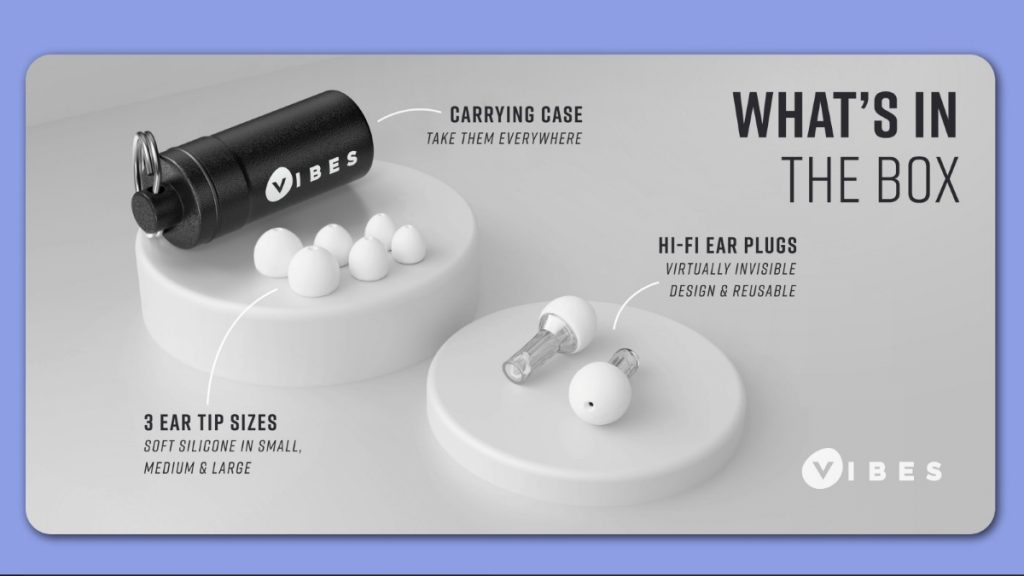
The Reality of Noise in Live Event Production If you work in or around the live events industry like our team at Decibel Events, loud environments are part of the job. Concerts, sound checks, rehearsals, warehouse builds, fabrication shops, power tools — even our own office can get loud. Without proper ear protection, hearing loss can set in faster than most people realize. A good rule of thumb: if you hear ringing in your ears after leaving a space, the noise was likely at a level that could cause damage. Hearing is one of our most fragile senses, and after years of exposure to the arenas and soundstages our industry calls home, it becomes measurably harder to hear the people around us. Progressive hearing loss affects millions of Americans, increasing medical costs and making everyday communication more difficult. The good news: it’s largely preventable with the right habits. How the dB Team Protects Our Ears on the Job Most of our team carries ear protection in our personal show kits, and we provide disposable foam plugs at off-stage announce and A2 positions as standard practice. For especially loud environments — concerts, or when a client is looking for a certain punch in the room — we use double-muff ClearCom headsets or in-ear monitors to block ambient noise while keeping show comms crystal clear. If you’re a client or staff member, ask your production crew about these options; this is a fairly standard piece of kit available on almost any show. It’s also increasingly common to see attendees bring their own earplugs to concerts, nightclubs, and sporting events. While many people still reach for standard foam plugs or over-ear muffs, the market has expanded to include hi-fidelity options from brands like SureFire (EarPro), Eargasm, Loop, 3M, and many others. Hands-On with Vibes Hi-Fidelity Earplugs Disclosure: Vibes provided our team with complimentary pairs for evaluation. This is not a paid partnership, and the observations below reflect our team’s experience. We are not endorsing this product — we’re sharing what we found so you can make your own informed decision. Recently, we had the opportunity to try out Vibes and their Hi-Fidelity Earplugs. The company says it specializes in premium, hi-fi earplugs designed to protect hearing without compromising sound quality. Our team found them noticeably smaller and more discreet than standard foam inserts. They ship with multiple sized tips (similar to AirPod ear tips) so you can dial in a comfortable fit. Across our team, the consensus was that they were comfortable, low-profile, and more durable than disposables — they held up through a full week of office use with no issues. The smaller form factor was a plus for team members who preferred something less visible. A Note on How Ear Protection Works One interesting takeaway from this process was understanding the difference in how various types of ear protection handle sound. Standard industrial foam earplugs tend to reduce treble (high frequencies) more than bass (low frequencies), which can make music sound muddy or distorted. Vibes claims their earplugs are engineered to attenuate sound more evenly across frequencies, preserving a more natural representation of music and live audio. As true skeptics, we looked into this ourselves — and the science does support the idea that hi-fi earplugs with acoustic filters perform differently from standard foam. For a deeper dive, see this article on earplugs for musicians from Hearing Health Matters: hearinghealthmatters.org — Earplugs for Musicians Important: We were not able to independently test specific dB reduction levels or frequency-specific attenuation data. Please do your own research and ensure any hearing protection you choose is appropriate for your specific environment before relying on it. Brandable Cases for Events One feature worth noting for event planners: the Vibes carrying case can be custom-branded with a logo or design. For clients looking for a practical, on-theme giveaway for attendees, that could be a useful option. Price Comparison For context, here’s where the Vibes sit in the current reusable earplug market: SureFire EarPro ($15–$25), Vibes ($35 with metal case), Loop ($35), Eargasm (~$45), and Sennheiser ($95). Disposable foam plugs are significantly cheaper, and custom in-ear monitors are significantly more expensive. Each option has its place, and what’s right depends on your role, your environment, and your priorities. If you’re looking for a compact, adjustable, brandable option, you can learn more at discovervibes.com. A big thank you to Jamie Sherwood and the rest of the Vibes team for the opportunity to put their product through a real-world production environment. The Bigger Picture Regardless of which brand or type of hearing protection you choose, the most important thing is that you use it. At Decibel Events, protecting our team’s hearing is part of how we operate, and we encourage our clients and collaborators to take it just as seriously. Your ears don’t get a second chance. About the Author Gabe Silverstein-Rivera | Event Production & Venue Strategy Gabe Silverstein-Rivera joined the Decibel Events production team in 2025, bringing a native Washingtonian’s deep-rooted understanding of the District’s evolving landscape. As a DC venue sourcing specialist, Gabe evaluates spaces for everything from acoustics and load-in logistics to AV infrastructure and noise management—details that directly shape the crew and attendee experience on show day. Having spent years attending live music, sporting events, and large-scale productions across the DC area, Gabe has a firsthand appreciation for what high-volume environments do to your hearing over time. That perspective makes him a strong advocate for crew safety and practical on-site solutions—from selecting the right ear protection to ensuring venues meet the technical demands of every show. When he isn’t scouting the next top-tier venue or field-testing production gear, Gabe is a dedicated student of storytelling—whether through the lens of cinema at local DC theaters, the roar of a sold-out DC sports crowd, or the city’s thriving culinary and hospitality scene. Looking for a venue that checks every box—or want to talk production safety for your next event? Reach out to Gabe at gabe@decibelevents.com
Hybrid Event Planning in Washington, DC: The Complete Guide to Engaging Both In-Person and Virtual Audiences
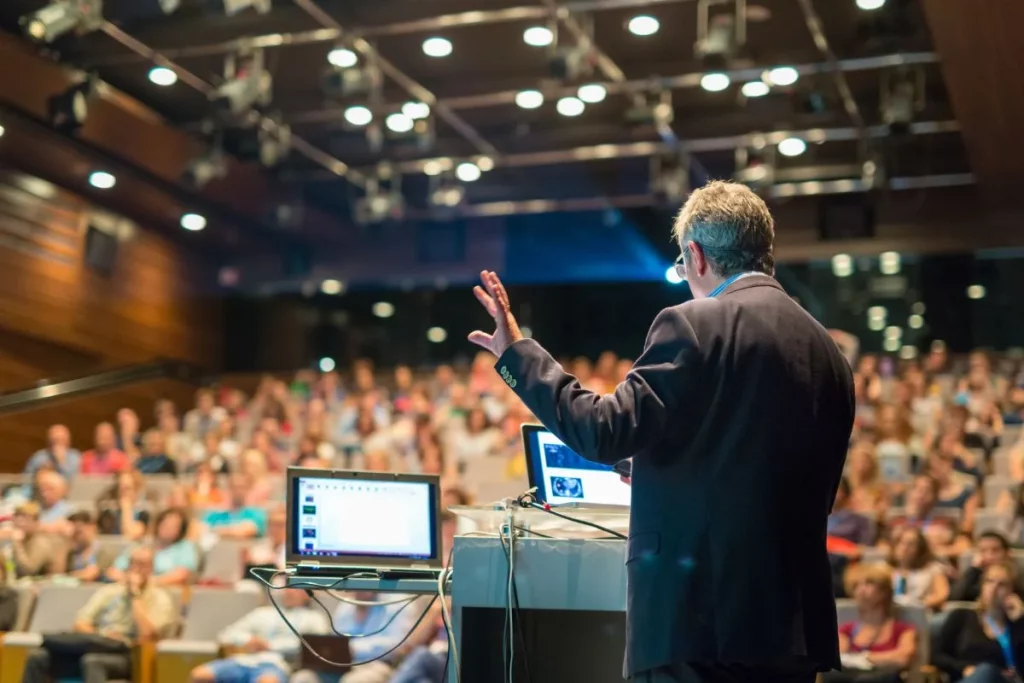
The way we gather has fundamentally changed. Whether you’re planning a corporate conference steps from the National Mall or organizing a government briefing near Capitol Hill, hosting hybrid events, hybrid events best practices has become the standard for organizations that want to maximize reach, engagement, and return on investment. In Washington, DC—a city built around connection, influence, and communication—the shift toward hybrid formats is especially pronounced. With 80 percent of event planners now hosting hybrid events as a core format, and 61 percent of organizers reporting that hybrid events are more cost-effective than in-person-only programs, the business case is stronger than ever. But pulling off a successful hybrid event requires more than pointing a camera at a stage. It demands intentional design, the right technology, and a planning partner who understands both the in-room and on-screen experience. In this guide, we’ll walk you through everything you need to know about hybrid event planning in Washington, DC — your complete roadmap to hybrid event planning done right from venue selection and technology to audience engagement and budgeting. What Is a Hybrid Event (and Why Does It Matter in 2026)? Understanding hybrid events best practices begins with knowing that hosting hybrid events means combining a live, in-person experience with a simultaneous virtual component, allowing attendees to participate from anywhere in the world. Unlike a simple livestream, a well-planned hybrid event creates distinct but equally engaging experiences for both audiences. The hybrid format has moved well beyond its pandemic-era origins. Industry data shows that approximately 37 percent of event budgets now go toward virtual and hybrid components—exceeding what many organizations spend on purely in-person or purely virtual gatherings. Meanwhile, the global corporate events market is projected to reach $595 billion by 2029, with hybrid delivery playing a central role in that growth. For organizations in Washington, DC, hybrid events are especially relevant. The city hosts hundreds of conferences, government convenings, and association meetings each year, many serving national or international audiences. A hybrid approach lets planners maintain the prestige of a DC-based event while extending access to stakeholders across the country and around the globe. Why Washington, DC Is the Ideal City for Hybrid Events Few cities offer the combination of infrastructure, audience, and gravitas that Washington, DC brings to event planning. Here’s why the nation’s capital stands out as a premier destination for hybrid event planning and hosting hybrid events: World-Class Venues with Built-In Tech Washington, DC boasts an impressive roster of venues equipped for hosting hybrid events. The Walter E. Washington Convention Center offers Studio 801, a 19,000-square-foot space designed for virtual and hybrid events with over 100 adaptable lighting designs. The National Press Club’s Broadcast Operations Center features two studios with control rooms and full connectivity services. Boutique options like the Big Whig broadcasting studio—one block from the White House—offer an iconic backdrop for intimate hybrid gatherings. A Built-In Audience of Decision-Makers DC’s concentration of government agencies, associations, nonprofits, and lobbying firms means your in-person audience often includes some of the most influential professionals in the country. A hybrid format lets you pair that high-value in-room experience with broad digital reach to members, supporters, or stakeholders nationwide. Strong Digital Infrastructure The District’s investment in high-speed connectivity and its network of production studios and AV providers make it one of the most technically capable cities for hybrid events. From LED walls and livestreaming to real-time polling and virtual breakout rooms, DC’s infrastructure supports the full range of hybrid production needs. 7 Hybrid Events Best Practices for Engaging Both Audiences Whether you’re a seasoned event professional or just starting out hosting hybrid events, these hybrid event planning steps will help you create an experience that works for every attendee. 1. Define Your Goals and Audience Segments Before choosing a venue or selecting a streaming platform, get clear on what success looks like. Are you trying to generate leads, educate members, launch a product, or build community? Your goals will shape every decision that follows. Equally important: understand that your in-person and virtual audiences may have different motivations for attending. In-person attendees often prioritize networking and face-to-face interaction, while virtual participants may value convenience, content access, and flexibility. Design your event to serve both groups intentionally. 2. Choose a Hybrid-Ready Venue Among hybrid events best practices, venue selection is a critical hybrid event planning decision — not every venue is equipped for hybrid delivery. When evaluating spaces in Washington, DC, look for reliable high-speed internet (dedicated lines, not shared Wi-Fi), built-in AV infrastructure or easy load-in access for production teams, good acoustics and lighting for both the live audience and cameras, and a layout that accommodates camera angles without disrupting the in-person experience. Keep in mind that booking lead times for large convention venues in DC have extended to 18 to 24 months, so planning early is essential. Working with a local event management partner who knows the DC venue landscape can save significant time and help you secure the right space. 3. Invest in Production Quality This is where hosting hybrid events most often falls short. Virtual attendees can tell immediately when they’re watching a low-effort stream of a live event. To create an engaging experience for remote participants, invest in professional-grade cameras and audio equipment, dedicated camera operators who frame shots for the virtual audience, on-screen graphics, lower thirds, and branded overlays, and a separate production director managing the virtual feed. Industry data shows that 60 percent of planners rank advanced AV support as a top priority. The investment in production quality pays for itself in audience engagement and brand perception. 4. Design for Two Experiences, Not One The biggest mistake in hybrid event planning is treating the virtual component as an afterthought. One of the most important hybrid events best practices is designing two parallel experiences that are equally compelling. For in-person attendees, focus on networking, hands-on activities, and the energy of a live environment. For virtual attendees, incorporate live polling, Q&A moderation, virtual breakout rooms, and chat-based networking. Consider
How Do You Make an Event Successful? A Complete Planning Guide
Every event starts with a vision. But between that initial idea and the moment guests walk through the door, there are dozens of decisions and moving parts that determine whether your event lands or falls flat. So, how do you make an event successful? The answer isn’t one thing. These event planning tips cover clear goals, strategic planning, creative execution, and seamless management. Whether you’re organizing a corporate conference at the Walter E. Washington Convention Center, a nonprofit gala along the Georgetown waterfront, or a product launch in Dupont Circle, the fundamentals remain the same. Here at Decibel Events, we’ve spent years producing high-impact events across Washington, DC and the surrounding region. In this guide, we’ll break down event planning tips, strategies, tools, and mindset shifts that separate forgettable gatherings from truly memorable experiences. Start With a Clear Purpose and Measurable Goals Before booking a venue, choosing a caterer, or designing invitations, you need to answer one fundamental question: why are you hosting this event? Events without a defined purpose tend to drift. They end up feeling unfocused, and attendees walk away without a clear takeaway. Successful events, on the other hand, are built around a specific objective that shapes every decision that follows. Your event purpose might be to: Launch a new product or service and generate media coverage Strengthen relationships with existing clients or stakeholders Raise funds or awareness for a cause Educate an audience through a conference or workshop Celebrate a milestone, whether corporate or personal Once you’ve nailed down your purpose, set measurable goals. If it’s a fundraiser, define your target number. If it’s a brand activation, decide how many leads you want to capture. These benchmarks help you evaluate whether the event was truly successful after it’s over. Know Your Audience Inside and Out Understanding your audience is just as important as understanding your goals. The people attending your event should feel like it was designed for them. That means thinking about what your guests care about, what keeps them engaged, and what experience they expect. Audience Research That Drives Better Events For corporate events in Washington, DC, your audience might include government officials, policy leaders, lobbyists, or C-suite executives. Each group has different expectations around formality, content depth, and networking. A tech startup launch in Shaw will feel very different from an embassy reception in Kalorama, and it should. Use surveys, registration data, and past event feedback to build a clear picture of your attendees. Then tailor everything, from the venue and agenda to the food and entertainment, to match their preferences. When people feel understood, they engage more deeply. Build a Realistic Budget and Stick to It Budget mismanagement is one of the fastest ways to derail an otherwise well-planned event. Among the most important event planning tips, financial discipline always comes first. You need a detailed budget that accounts for every major expense category and includes a contingency fund for surprises. A comprehensive event budget should cover: Venue rental and permits Production and AV – sound, lighting, staging, and technical support Catering and beverages Design and branding – signage, printed materials, and decor Entertainment and speakers Marketing and promotion Staffing and security Contingency fund – allocate 10 to 15 percent for unexpected costs One of the top event planning tips is working with an experienced event management partner to allocate resources wisely and avoid costly surprises. A seasoned team knows where to invest for maximum impact and where to cut without sacrificing quality. Choose the Right Venue for Your Event Your venue sets the tone for everything. It influences the mood, logistics, and how your brand is perceived. In Washington, DC, you have access to an incredible range of spaces, from historic landmarks and rooftop terraces to modern conference centers and converted warehouses in Navy Yard and Union Market. What to Consider When Selecting a Venue Capacity and layout – Does the space fit your guest count with room for staging and flow? Location and accessibility – Is it Metro-accessible with nearby parking? Technical infrastructure – Adequate power, Wi-Fi, and AV capabilities? Ambiance – Does the space align with your event’s brand and tone? Vendor flexibility – Can you bring in preferred vendors or are in-house vendors required? Visit your top venue choices in person before committing. Photos rarely capture how a space actually feels, and a walkthrough with your event production team can reveal logistical opportunities or challenges you wouldn’t spot otherwise. Invest in Professional Event Production Among all event planning tips, production quality is what separates a good event from a great one. Lighting, sound, staging, video, and technical coordination create the sensory environment that shapes how attendees experience your event. Even compelling content falls flat in a room with poor audio or harsh lighting. Key production elements that elevate your event include: Professional sound design – Clear audio for speakers, panelists, and entertainment ensures your message is heard Dynamic lighting – Thoughtful lighting design sets the mood, highlights key moments, and guides attention Video and projection – Live video feeds, branded motion graphics, and screen content add visual energy Stage design – A well-designed stage creates a professional focal point and reinforces your brand In Washington, DC, where events often feature high-profile speakers and media coverage, production quality matters even more. A polished production signals professionalism and ensures your message comes through clearly, no matter the size of the room. Create a Strong Event Brand and Creative Identity Every touchpoint of your event communicates something about your brand. From the invitation design to venue signage, speaker slides, and social media graphics, consistency matters. A strong event creative strategy ties all elements into a cohesive visual identity, including your event logo, color palette, typography, and messaging. When every detail feels intentional, attendees perceive your event as more professional, credible, and memorable. Don’t underestimate the power of great design. In DC, where attendees regularly experience high-caliber events hosted by government agencies and Fortune 500 companies, creative quality is a true